Sangam Retreat House

Categories
Arunachala Blogs Tiruvannamalai Wisdom

Who Are the Tamil Siddhas?

Introduction

The spiritual landscape of Tamil Nadu is rich with traditions of contemplation, devotion, and the search for self-realisation. Among these, the Tamil Siddha tradition occupies a distinctive place. The Siddhas, revered as accomplished spiritual masters, explored the nature of existence through disciplines of the body, mind, and consciousness. Their teachings have been preserved through Tamil poetry, philosophical writings, medical literature, and traditions of spiritual practice.

The word Siddha is derived from the Sanskrit root siddh, meaning to accomplish or attain perfection. In spiritual traditions, a Siddha is understood as one who has attained a profound degree of spiritual realisation or mastery. Tamil tradition remembers these figures not merely as scholars or ascetics, but as seekers who pursued direct understanding of the deeper nature of life.

The sacred mountain of Arunachala and the temple town of Tiruvannamalai form part of this wider spiritual heritage. Long associated with Shaiva devotion, sages, and spiritual inquiry, the region offers a meaningful setting in which to explore the teachings and legacy of the Tamil Siddhas.

This article examines who the Siddhas were, their philosophical outlook, their principal figures, and the traditions through which their wisdom has been preserved.


Origins and Historical Context of the Tamil Siddhas

Ancient Roots in Tamil Culture and Spirituality

The precise origins of the Tamil Siddha tradition are difficult to establish. It developed within a rich landscape of Tamil religious thought, Shaiva traditions, yogic disciplines, and the pursuit of direct spiritual experience. Its history reflects the interaction of different streams of religious, philosophical, and practical knowledge over many centuries.

Mountains, caves, forests, and secluded places have long held significance within Indian spiritual traditions. Such environments provided settings for meditation, austerity, and contemplative practice. The Siddhas are frequently associated with these landscapes, which became part of their enduring imagery in Tamil literature and devotional memory.

The tradition’s historical development is reflected in Tamil literary works, medical writings, philosophical texts, and palm-leaf manuscripts. Although the dates of many figures and texts remain uncertain, the Siddha heritage has had a lasting influence on Tamil Nadu’s spiritual and medicinal culture.

Historical Development

The history of the Siddhas is not a straightforward chronology of a single organised movement. Many revered figures are known primarily through traditional accounts, and works attributed to them may have developed over generations.

Agastya (Agathiyar) and Tirumular are regarded as foundational teachers within the tradition. Agastya is particularly associated with Tamil Siddha medicine and traditional knowledge, while Tirumular is traditionally credited with the Tirumantiram, an important work of Tamil Shaiva spirituality.

Over time, Siddha teachings developed through literary traditions, practitioner lineages, and the transmission of medical and spiritual knowledge. Siddha medicine became increasingly formalised as a distinct system of traditional medicine, particularly in Tamil Nadu.

Today, the Siddha tradition continues through medical practice, scholarship, spiritual teachings, and cultural preservation. Its historical significance lies not in a single fixed period, but in the diverse traditions through which its teachings have been transmitted.


Core Philosophy and Spiritual Beliefs

The Relationship Between the Body and the Universe

A central idea in Siddha thought is the relationship between the human being and the wider universe. This is often expressed through the principle that the microcosm reflects the macrocosm.

In Tamil spiritual traditions, this relationship is described through the concepts of Andam, meaning the universe, and Pindam, meaning the individual body. The human being is understood as part of the larger natural and cosmic order.

The five elements—earth, water, fire, air, and space—are traditionally understood to constitute both the external world and the human body. This perspective encourages an understanding of human existence that extends beyond the physical structure alone.

Within many Siddha teachings, the body is regarded as an important field of spiritual inquiry. The cultivation of awareness and the understanding of one’s true nature are closely connected with the disciplined observation of bodily and mental experience.

The Path to Self-Realisation

Self-realisation occupies a central place in Siddha spirituality. The deeper aim of spiritual practice is understood as the recognition of one’s true nature beyond ordinary identification with the body, mind, and individual personality.

Siddha literature also discusses concepts such as kāya siddhi, associated with bodily accomplishment or transformation, and ātma siddhi, associated with the realisation of the Self. In some traditional accounts, bodily transformation is described through the image of Swarna Deham, or the “Golden Body.”

The Ashta Siddhis, or eight extraordinary powers, also appear in Siddha and wider Indian yogic traditions. These traditionally include anima, the ability to become exceedingly small; mahima, the ability to expand beyond ordinary limits; and laghima, the ability to become extremely light.

Such powers are described in spiritual literature, but they are not universally regarded as the ultimate goal of the spiritual path. The deeper aspiration is liberation from ignorance and the direct understanding of one’s true nature.

The guidance of a spiritual teacher has traditionally been considered important in this journey, helping the seeker move beyond intellectual understanding towards direct experience.


Notable Tamil Siddha Masters and Their Contributions

The Siddha tradition remembers numerous spiritual masters, although the historical details of their lives are often uncertain. Three figures hold particularly important places in its traditional history.

Agastya (Agathiyar)

Historical period: Uncertain; revered in Vedic and Tamil traditions

Agastya, known in Tamil as Agathiyar, is traditionally regarded as a foundational teacher of the Tamil Siddha tradition. He is associated with Siddha medicine, yoga, grammar, and traditional knowledge.

Tamil tradition credits him with an important role in the development of Tamil language and literature. Numerous medical and philosophical works are attributed to him, although their authorship and dates cannot always be established with certainty.

Agastya remains one of the most revered figures in the traditional history of Siddha medicine.

Bogar

Historical period: Uncertain; traditionally associated with Palani

Bogar is remembered for his association with alchemy, medicine, and spiritual practice. He is particularly connected with Palani and the shrine of Lord Murugan.

According to tradition, Bogar fashioned the Murugan image at Palani using Navapashanam, a specially prepared combination of nine substances. This account remains an important part of the shrine’s religious tradition.

Teachings attributed to Bogar reflect the Siddha interest in material transformation, medicinal preparations, and spiritual discipline.

Tirumular

Historical period: Uncertain; traditionally regarded as an ancient Shaiva saint

Tirumular is one of the most influential figures in Tamil Shaiva spirituality. He is traditionally regarded as the author of the Tirumantiram, a major Tamil work comprising approximately 3,000 verses.

The text explores ethical living, devotion, yoga, meditation, consciousness, and spiritual liberation. It occupies an important place in Shaiva Siddhanta and continues to be studied as a source of spiritual reflection.

Although the historical date of Tirumular and the composition of the Tirumantiram remain subjects of scholarly discussion, his influence on Tamil spiritual thought is enduring.

The Eighteen Siddhas (Pathinettu Siddhargal)

In Tamil tradition, the Eighteen Siddhas are revered as a group of accomplished spiritual masters associated with the development and transmission of Siddha knowledge. The list of eighteen varies across sources, reflecting the diversity of the tradition and the different lineages through which its teachings have been preserved.

Among the other revered figures are Konganar, Korakkar, Karuvurar, Pambatti Siddhar, Idaikkadar, and Theraiyar. Their names and teachings are preserved through different literary and devotional traditions.

Rather than viewing the Eighteen Siddhas as a historically fixed organisation, it is more accurate to understand them as a traditional grouping of revered masters whose lives and teachings represent the breadth of Siddha thought.

Their collective legacy reflects the enduring Tamil aspiration towards wisdom, spiritual accomplishment, and liberation.

Lesser-Known but Significant Siddhas

Beyond the traditionally recognised Eighteen Siddhas, Tamil tradition remembers many other spiritual figures associated with healing, yogic practice, poetry, and spiritual guidance. Some are known through literary works and local traditions, while others remain less clearly documented.

Women, too, have contributed to Tamil spiritual and literary heritage, although their lives and teachings are not always equally represented in historical accounts.

Avvaiyar is one such revered figure. The name is associated with more than one poet from different periods, and some accounts also regard Avvaiyar as a Siddha. Her enduring legacy reflects the importance of wisdom, ethical living, devotion, and spiritual insight in Tamil culture.

The Siddha tradition also remains alive through devotional practices and the reverence shown at shrines associated with Siddha masters. Across Tamil Nadu, devotees visit places believed to be the jeeva samadhis of Siddhas—sacred sites associated with the spiritual presence of these realised beings.

Among the places traditionally linked with Siddhas are Palani, associated with Bogar; Kumbakonam, associated with Agastya; and Thiruvaduthurai, associated with Tirumular. In Tiruvannamalai, a shrine believed to mark the samadhi of Idaikkadar is located near the Arunachaleswarar Temple.

Other sites associated with Siddhas include Sankaran Koil, linked with Pambatti Siddhar; Poigainallur near Nagapattinam, linked with Korakkar in some traditions; and Alagar Malai near Madurai, associated with Ramadevar in certain accounts.

These sacred places offer a glimpse into the continuing devotional life surrounding the Siddhas. Their associations are preserved through local traditions and may vary between sources.


Practices, Rituals, and Methodologies

Alchemical Practices and Material Transformation

Alchemical practices occupy an important place in the Tamil Siddha tradition, bringing together knowledge of metals, minerals, herbs, and medicinal preparations. Known in Indian alchemical traditions as rasa shastra, this field explored the properties and transformation of substances, including mercury and sulfur.

Within Siddha literature, alchemical practices are associated with medicine, the preservation of health, longevity, and, in some accounts, bodily transformation.

For certain Siddhas, alchemy carried meanings beyond the preparation of medicines. The purification and transformation of material substances could also serve as a metaphor for the practitioner’s inner discipline and spiritual development.

The preparation of Siddha medicines required specialised knowledge of herbs, minerals, processing methods, and traditional formulations. These methods reflect a historical tradition of practical experimentation intertwined with philosophical and spiritual ideas.

Traditional claims about the efficacy or life-extending properties of particular preparations should not be assumed to be scientifically established. Mercury and certain mineral ingredients can also be toxic if improperly processed or used.

Siddha alchemy therefore offers a distinctive perspective on the relationship between material knowledge and spiritual aspiration.

Yogic and Meditative Disciplines

Yogic and meditative practices hold an important place in the Tamil Siddha tradition. Disciplines involving postures, breath regulation, concentration, and meditation are described in Siddha teachings as ways of cultivating inner steadiness and deepening self-awareness.

Breath control, known as prāṇāyāma in Sanskrit, features in several Indian yogic traditions. Tamil Siddha literature also refers to Vasi Yogam, a practice commonly associated with the regulation of breath and vital energy.

Some Siddha teachings connect these disciplines with kundalini, understood in yogic traditions as a latent spiritual energy that may be awakened through sustained practice and guidance.

Through disciplined breathing and meditation, practitioners seek to cultivate greater steadiness of body and mind and deepen their understanding of consciousness. Certain traditional texts also describe extraordinary abilities arising from advanced yogic attainment, although these are not universally regarded as the central aim of practice.

For many spiritual traditions, the deeper purpose is self-knowledge, inner transformation, and liberation.

Healing Arts and Medical Knowledge

Siddha medicine is one of India’s established traditional systems of medicine, with deep roots in the medical and cultural heritage of Tamil Nadu. It encompasses knowledge of medicinal plants, minerals, diet, lifestyle, and therapeutic practices.

In Siddha thought, illness is often understood in terms of imbalances within the body and its relationship with the surrounding environment.

An important concept in Siddha philosophy is the framework of the 96 tattvas, or principles, traditionally used to describe aspects of human existence, including the body, senses, mind, and consciousness. This framework reflects the Siddha understanding of the human being as a complex whole.

Traditional Siddha diagnosis may include observation of the pulse, known as nāḍi, alongside examination of other physical signs and symptoms. Practitioners interpret these observations within their traditional diagnostic framework to assess a person’s condition and guide treatment.

Siddha remedies may include preparations made from herbs, minerals, and other substances, while treatment approaches can also involve dietary guidance and lifestyle practices.

The safety and effectiveness of individual treatments depend on the specific preparation and available evidence. Mineral-based medicines in particular require careful quality control and professional oversight.

Siddha medicine remains a living tradition, while its treatments continue to be studied and evaluated.

Literary Contributions and Sacred Texts

The teachings of the Tamil Siddhas have been preserved through a rich body of Tamil literature, palm-leaf manuscripts (ōlai chuvadi), poetry, and traditions of teaching and practice.

Among the important works associated with this spiritual heritage is the Tirumantiram, traditionally attributed to Tirumular. This influential text explores ethical living, devotion, yoga, meditation, the nature of consciousness, and spiritual liberation.

Other works attributed to Agastya, Bogar, and various Siddhas preserve traditional teachings on medicine, alchemical practices, and yogic disciplines. Their dates, authorship, and textual histories can be difficult to establish with certainty.

Siddha teachings have also been transmitted through poetry and oral instruction, allowing philosophical and spiritual ideas to be expressed in memorable verses and images.

Some Siddha and other Indian esoteric writings employ symbolic, metaphorical, or specialised language whose meaning may not be immediately apparent to a general reader. In certain traditions, such language is interpreted through knowledge of the relevant teachings and practices. Its use and purpose, however, vary across texts.

The literary legacy of the Siddhas reflects a tradition in which written knowledge, poetic expression, practical disciplines, and spiritual instruction intersect.

Tiruvannamalai, Arunachala, and the Siddha Tradition

Tiruvannamalai occupies a distinctive place in Tamil Nadu’s spiritual landscape. At its heart stands Arunachala, the sacred mountain revered in Shaiva tradition as a manifestation of Shiva.

The Arunachaleswarar Temple, dedicated to Lord Shiva, is one of the region’s principal sacred centres. The mountain and temple have long been associated with devotion, pilgrimage, meditation, and the search for self-knowledge.

Traditional accounts also associate Arunachala with sages and Siddhas who are believed to have lived in caves and secluded places on the mountain. These associations form part of the region’s devotional heritage, although individual accounts vary in their historical documentation.

The spiritual significance of Arunachala extends beyond any single lineage or school. Its enduring presence has drawn seekers from diverse backgrounds, making Tiruvannamalai an important place for exploring the many expressions of Tamil spiritual life.

Ramana Maharshi and the Siddhas of Arunachala

The relationship between Sri Ramana Maharshi and the Siddha tradition is an interesting aspect of Tiruvannamalai’s spiritual heritage.

Although Ramana was not formally associated with a Tamil Siddha lineage, his life and teachings were deeply connected with Arunachala, a sacred mountain traditionally regarded as a dwelling place of Siddhas, sages, and other realised beings.

Ramana himself spoke of Siddhas inhabiting the mountain, and accounts preserved by his devotees describe his acceptance of this ancient belief. An interesting reference appears in the eighteenth chapter of the Sri Ramana Gita, titled “On the Glory of the Siddhas”, which records a discussion between Ramana and his disciple Kavyakantha Ganapati Muni on the spiritual stature of these beings.

There is, however, an important distinction between the two traditions. The Tamil Siddhas are remembered through diverse teachings and disciplines, while Ramana’s central teaching was the direct enquiry into the nature of the Self. His path did not depend on mastering yogic powers or pursuing bodily transformation, but on discovering the source of the individual sense of self.

Their connection, therefore, lies less in a shared lineage or system of practice than in their association with the spiritual landscape of Arunachala and the pursuit of realisation.

Ramana’s presence adds a more recent and distinctive chapter to the long spiritual history of this sacred mountain.

Modern Relevance and Contemporary Impact

The Tamil Siddha tradition continues to hold a place in the region’s medical, spiritual, and cultural heritage. Siddha medicine remains a recognised traditional system of medicine in India, particularly in Tamil Nadu, where practitioners continue to draw upon its knowledge of medicinal plants, traditional formulations, diet, and lifestyle.

Researchers have also studied aspects of Siddha medicine, although the available scientific evidence varies across treatments, and questions of efficacy, quality, and safety remain important.

The spiritual teachings associated with the Siddhas continue to attract interest among people exploring yoga, meditation, self-inquiry, and the relationship between bodily well-being and inner awareness.

Tiruvannamalai forms a meaningful part of this wider spiritual landscape. The presence of Arunachala and the ancient Arunachaleswarar Temple has long drawn pilgrims and spiritual seekers, while local traditions associated with sages and Siddhas add another dimension to the region’s religious heritage.

The preservation and study of Siddha literature also remain important. Palm-leaf manuscripts, traditional medical writings, poetry, and philosophical texts offer valuable insights into the history of Tamil knowledge and spirituality.

The continuing significance of the Siddhas lies not only in the survival of ancient texts and practices, but also in the questions their teachings raise about the human body, the natural world, consciousness, and the search for liberation.


Summary

The Tamil Siddhas occupy a distinctive place in the spiritual and cultural heritage of Tamil Nadu. Remembered through their teachings, poetry, medical writings, and yogic traditions, they explored the relationship between body, mind, and consciousness, bringing together spiritual inquiry, practical knowledge, and the pursuit of self-realisation.

Figures such as Agastya, Bogar, and Tirumular continue to hold an important place in this heritage, although the historical details of their lives and the origins of many texts attributed to them remain uncertain.

The Siddha tradition encompasses a diverse range of disciplines and teachings, preserved through literary works, palm-leaf manuscripts, and traditions of practice and transmission.

Tiruvannamalai and the sacred mountain of Arunachala form part of the wider spiritual landscape in which these traditions are explored and remembered. For visitors to the region, learning about the Siddhas offers another perspective on Tamil Nadu’s enduring heritage of contemplation, healing traditions, and spiritual inquiry.

Their legacy continues to invite reflection on the relationship between human life, the natural world, and consciousness. In this sense, the Siddha tradition remains not only a subject of historical and cultural interest, but also a source of questions and insights for those seeking greater self-understanding.


Frequently Asked Questions

Who is considered the first Tamil Siddha?

Agastya, known in Tamil as Agathiyar, is traditionally revered as a foundational figure in the Tamil Siddha tradition and is widely regarded as the father of Siddha medicine. Numerous medical and spiritual works are attributed to him, although the historical details of his life remain uncertain.

How many Tamil Siddhas are there in total?

The tradition commonly recognises the Eighteen Siddhas (Pathinettu Siddhargal) as a group of principal masters. However, the list varies across sources, and many other Siddhas are remembered through Tamil literature, medical writings, and regional traditions. There is no established total number of all Siddhas.

What distinguishes Tamil Siddhas from other yogic traditions?

The Tamil Siddha tradition brings together yogic practice, spiritual inquiry, medicine, alchemy, and philosophical reflection. A distinctive feature of many Siddha teachings is their interest in the relationship between bodily well-being and spiritual realisation. Although the tradition has its own Tamil literary and cultural identity, it also shares concepts and practices with wider Indian yogic and Shaiva traditions.

Were there any female Tamil Siddhas?

Women are less visible in many surviving accounts of the Siddha tradition, but Tamil spiritual and literary heritage includes revered women associated with wisdom, devotion, and spiritual insight. Avvaiyar, a name associated with more than one Tamil poet, is regarded in some traditions as a Siddha. The historical identities of these figures and the extent of their association with the Siddha lineage are not always certain.

Can Siddha practices be learned and practised today?

Yes. Siddha medicine is practised by qualified practitioners, while yoga, meditation, and related disciplines continue to be taught in various settings. Anyone seeking medical treatment should consult a properly registered Siddha practitioner. Advanced yogic and esoteric practices are traditionally approached under the guidance of an experienced teacher.

Preparations involving mercury, metals, or minerals should never be attempted independently, as they may pose serious health risks.

What is the relationship between Siddha medicine and modern healthcare?

Siddha medicine is one of India’s recognised traditional systems of medicine and continues to be practised alongside modern healthcare. Research has examined various Siddha formulations and treatment approaches, but the strength of evidence varies by treatment. Traditional use alone does not establish that a remedy is safe or effective for a particular condition. Patients should inform their healthcare professionals about any traditional medicines they use and should not delay necessary medical care.

How can I find a Siddha clinic or practitioner in Tiruvannamalai?

In Tamil Nadu, Siddha practitioners must be registered with the Tamil Nadu Siddha Medical Council. Before arranging treatment, check the practitioner’s current registration and qualifications.

Visitors to Tiruvannamalai can also enquire about Siddha services at government-run healthcare facilities, including the Integrated AYUSH Hospital. Readers should confirm current outpatient timings, available treatments, and contact details directly with the hospital or the Tamil Nadu Directorate of Indian Medicine and Homoeopathy before visiting.

When choosing any Siddha clinic, ask about the practitioner’s qualifications, the ingredients in prescribed medicines, possible side effects, and whether the treatment is appropriate alongside any existing medical care.

Categories
Arunachala Blogs Sangam House Guide Tiruvannamalai

A Seasonal Guide to Visiting Tiruvannamalai & Arunachala

Many visitors first discover Tiruvannamalai during the cooler months of January and February, when the weather is mild and the town is full of retreat programs, pilgrims, and international visitors. While these months are certainly beautiful, Arunachala carries a unique atmosphere throughout the year, and each season offers its own rhythm, mood, and experience. Unlike much of North India, Tamil Nadu follows a different rainfall pattern. Tiruvannamalai receives lighter rainfall from the Southwest monsoon between June and September, while the more significant Northeast monsoon usually arrives during November and early December. Rain here often comes as intermittent showers spread across days or weeks rather than continuous rainfall.

Below is a general sense of what the different months can feel like around Arunachala.


The Transition Into the Cooler Season — September & October

September

Temperatures typically range from 24–34°C (75–93°F). September marks the gradual transition from the hotter months into a greener and more comfortable season. Tiruvannamalai receives a small amount of rain from the Southwest monsoon during this period, usually as occasional showers rather than continuous rain. A quieter, more relaxed time to visit, with fewer crowds at the Ashram and around Arunachala.

October

Temperatures usually range from 23–32°C (73–90°F). The atmosphere begins to soften after the summer heat, with more pleasant mornings and evenings. October sits between the two monsoon patterns and may bring a mix of humid days, scattered showers, and periods of sunshine. The town feels calm and spacious — a lovely balance between comfort, greenery, and relatively quiet before the peak season begins.

Monsoon & Deepam Season — November & December

November

Temperatures typically range from 22–30°C (72–86°F). One of the most beautiful and atmospheric months in Tiruvannamalai. This is the main Northeast monsoon period in Tamil Nadu, bringing more regular rainfall, though usually spread across the month rather than constant heavy rain. The landscape becomes greener and cooler, and the town begins to awaken with spiritual energy leading toward the Deepam festival. While busier than October, it is often still more spacious and relaxed than January and February.

December

Temperatures usually range from 20–29°C (68–84°F). Cool mornings, comfortable days, and a vibrant spiritual atmosphere make December especially attractive. The Northeast monsoon may continue into early December, though rains usually lessen as the month progresses. The Karthigai Deepam festival — one of Tiruvannamalai’s most significant annual events — generally falls during November or December, drawing pilgrims and visitors from around the world. During the festival period the town becomes very lively and accommodation fills quickly.

Peak Season — January & February

January

Temperatures generally range from 19–28°C (66–82°F). One of the most popular months to visit, with mild weather, clear skies, and many retreats, gatherings, and international visitors in town. The Ashram and Tiruvannamalai can feel quite busy and vibrant during this period, especially around weekends and full moon days.

February

Temperatures usually range from 21–31°C (70–88°F). Still a highly sought-after month, though often slightly less crowded than January. Warm sunny days combine with relatively cool mornings and evenings, making it a comfortable time for walking, practice, and enjoying the Arunachala area before temperatures begin rising again toward summer.


The Quiet Season— March to August

March

Temperatures typically range from 23–35°C (73–95°F). March marks the beginning of the warmer season. Mornings and evenings can still feel pleasant, while afternoons become increasingly hot. Visitor numbers begin to reduce, offering a quieter and more spacious atmosphere around Tiruvannamalai and the Ashram.

April

Temperatures usually range from 25–38°C (77–100°F). The heat becomes more intense during the day, though early mornings remain peaceful and well-suited for meditation, walking, and quieter retreat experiences. This is generally a much less busy month, offering a chance to experience Tiruvannamalai with relatively few visitors around.

May

Temperatures generally range from 27–40°C (81–104°F). May is typically the hottest month of the year. Days can be intensely warm, though some visitors appreciate the slower rhythm that settles over the town during this period. A quieter season best suited for those comfortable with tropical heat.

June

Temperatures usually range from 26–38°C (79–100°F). The heat continues, though occasional pre-monsoon showers and cloud cover may begin to appear. Tiruvannamalai remains relatively calm and uncrowded, with a more local and grounded atmosphere.

July

Temperatures typically range from 25–36°C (77–97°F). July brings occasional rainfall connected to the Southwest monsoon, though this monsoon is relatively mild in Tiruvannamalai compared to many parts of India. While still warm, there can be periods of cooler weather, greenery, and dramatic skies around Arunachala.

August

Temperatures usually range from 24–35°C (75–95°F). Intermittent showers from the Southwest monsoon continue, bringing greener surroundings and a refreshing shift in atmosphere. The town remains relatively relaxed, with fewer international visitors and a quieter rhythm overall.


Finding Your Own Season

Every season around Arunachala offers something different. Some visitors are drawn to the vibrant spiritual energy of Deepam and peak season, while others prefer the quiet spaciousness of the warmer or transitional months.

There is no single “best” time to visit Tiruvannamalai — only different atmospheres and experiences.

We look forward to welcoming you to Sangam House, in whichever season Arunachala calls you here.


Frequently Asked Questions

What is the best time of year to visit Tiruvannamalai?

The most popular months are January and February, when temperatures are mild and many retreats and international visitors are in town. However, many guests also enjoy November and December for the cooler weather, greener landscape, and the spiritual atmosphere surrounding the Deepam festival.

Does it rain a lot in Tiruvannamalai?

Not usually in the way many people imagine Indian monsoons. Tiruvannamalai experiences relatively moderate rainfall compared to many parts of India. The Southwest monsoon (June–September) brings occasional showers, while the Northeast monsoon (October–December) is the main rainy season in Tamil Nadu, usually with intermittent rainfall spread across the weeks rather than constant heavy rain.

Is November or December a good time to visit?

Yes — for many people these are especially beautiful months to experience Arunachala. The weather is cooler, the landscape greener, and the spiritual atmosphere around Deepam season can feel very alive and meaningful.

What is the Karthigai Deepam festival?

Karthigai Deepam is Tiruvannamalai’s most important annual spiritual festival, generally taking place in November or December. Thousands of pilgrims gather as a sacred flame is lit atop Arunachala Hill, symbolizing divine light. During this period the town becomes vibrant and accommodation often books well in advance.

Is Tiruvannamalai too hot outside of winter?

From April through June temperatures can become quite high during the day. However, some guests appreciate the quieter atmosphere and slower rhythm of these months. Early mornings and evenings can still be peaceful and suitable for practice, meditation, and rest.

Are the Ashram and town crowded all year?

No. January and February are generally the busiest months, especially around full moon days and weekends. November and December can also become lively, particularly during the Deepam festival period, though outside the festival atmosphere they often feel more balanced and spacious than peak season. September, October, and parts of the warmer season can feel especially quiet and relaxed.

Which months are best for a quieter retreat experience?

September and October are often especially appreciated by guests seeking a calmer and more inward atmosphere, with fewer visitors and a slower pace around town. November and December can also be wonderful months to visit, offering cooler weather, greener surroundings, and a rich spiritual atmosphere, while still often feeling less busy than the peak January–February season outside of Deepam festival time.

Do I need air conditioning during my stay?

Many guests prefer air conditioning during the warmer months from March through June. During November through February, evenings and mornings are usually much cooler and more comfortable.

How far in advance should I book during Deepam or peak season?

For Deepam season, January, and February, it is advisable to book accommodation well in advance, as Tiruvannamalai becomes especially busy during these periods.

Categories
Blogs Sangam House Guide

What to Expect at Sangam Retreat House: A Guest’s Guide

Sangam Retreat House – where there is a rhythm that slows the pulse of time; where your arrival feels less like checking in and more like coming home to yourself. You’ve booked your stay, packed your bags, and set your intention—but there’s still that flutter of uncertainty: What really happens when I get there? This guide walks you through the experience—from the moment you drive to our sanctuary to the details that inspire guests to return year after year.

You may arrive with questions or simply with the need to pause. And as you step into our sanctuary, something shifts. The mountain watches in silence. The air carries stories. And the space—spacious, serene, sacred—begins to hold you. Our returning guests often call it their “reset button.” And yes, many get emotional when they speak of the mountain view that can move people to tears. 

This guide is an attempt to provide guests with everything they need in terms of logistics and planning ahead for Retreat in Tiruvannamalai, South India. So what unfolds during those transformative days? Let’s take you inside.

Before You Arrive Essential Preparations:

Booking and Reservation 

Reserving your space at Sangam Retreat House is simple —just visit www.sangamhouse.com and fill out our contact form. Once submitted, a member of our team will reach out shortly to assist you with the next steps. We recommend booking early to ensure a smooth experience — Sangam House tends to fill quickly during the winter season. 

Making Travel Arrangements

·       You need a passport that is currently valid for at least 6 months.

·       You must obtain a travel visa to India (tourist visa) by completing an on-line application. Go to evisa and follow instructions for tourist visa.

What to Pack for Your Retreat

Packing for Retreat isn’t quite like prepping for a typical vacation. Comfort, modesty, and mindfulness are your guiding principles.  Here’s what to bring:

Weather and Clothing

·       In South India during your trip it will be comfortable weather, with rain unlikely but possible. The average maximum temperatures are 300 C / 860 F during the day in December / January; minimum average temps are 200 C / 680 F.

·       In the sun, the days will be warm, so plan to have clothes that will allow you to be appropriately covered but not hot. At night it may be cool, so you may need some kind of sweater/vest/shawl and sleepwear that is warm. It is suggested to wear loose, layered, comfortable clothing, covering the legs, and if sleeveless, a scarf or shawl. Light, breathable attire is suggested for daily asana practice and yoga. 

Respectful temple wear – In Tiruvannamalai’s sacred spaces, modesty matters. Clothing should cover the chest, shoulders, and legs. For women, sleeves are encouraged, and trek-friendly outfits should still honor local customs.

Shoes for specific activities: Sturdy walking shoes or trainers are ideal for nature walks, travel days, and exploring the hillside. Flip-flops or sandals work well for indoor communal spaces and moments of ease.

  • Crocs are good because they are waterproof, easy to wash, and can slip on and off easily
  • Also consider that your footwear should not be too valuable, as shoes may be left outside in shared areas.

Money 

Traveler’s checks will not be much use in India, and credit cards will not be as uniformly accepted as you are used to in the US or even many other countries. Upon leaving for India, ensure that you have sufficient available cash to withdraw and/or bring with you. There will be ATM cash machines at the airport when you arrive to get cash in Indian rupees. One can also choose to bring other currencies and change to rupees in Tiruvannamalai or get rupees from ATM machines here. Please be advised that there is only one ATM machine near Ramana Ashram, there is often a long line, and sometimes they are out of cash. It is suggested to bring credit and debit cards and some cash, so you have several options.

It is also VERY important to let your bank know the period of your stay in India so that they do not suspect fraudulent activity and stop your ATM/credit card, and therefore your access to money.

Cell phone 

It is fairly easy and inexpensive to get 1 month of international roaming just for texting. You can also bring an unlocked cell phone which takes a sim card, and for a small amount get a local sim card on the first day, with enough “pay as you go” credit to last the trip.

On your arrival at Sangam House, an emergency number will be provided so that anyone in the group can be contacted if necessary in an emergency. Feel free to give this number to your loved ones and work colleagues for emergency calls only. This number will only work during the days of Retreat.

Other Items

  • Mosquito repellent that is natural and non-toxic / non-scented. (Vibhuti (sacred ash) works well. It is the sunscreen of the yogis!) 
  • Several passport size photos of yourself, several photocopies of the picture page of your passport, and your visa / evisa for India.
  • A torch/flashlight with the widest beam is important for navigating at night.
    • Batteries that last long and are light (e.g. lithium).
  • Sun protection – Sunscreen will be needed, perhaps natural and non-toxic as for baby skin. The suggestion to avoid toxic products is not only for yourself but for the benefit of all traveling together, especially those with sensitivities and allergies.
    • Hat and/or sunglasses for sun protection, especially when walking on the mountain.
  • Reusable water bottle – A water bottle is essential. Even though you will be provided with high quality water in the Retreat House, you need to carry your own bottle to ensure you have enough water at all times, especially on the mountain. 
  • Neti pots are highly recommended to remove pollutants, using packets of Himalayan salt for nasal cleansing solution. 
  • A money belt that is light and goes around the waist is suggested so that important documents and money are easily accessible and secure.
  • Journal and pen – For internal reflection and writing during retreat.
  • Daypack or small backpack that can be taken on walks, especially on the mountain. Note that you will not want to bring a purse that cannot be carried across the chest. Purses are easy to grab off one’s shoulders when walking and distracted.
  • Protein bars are essential to sustain yourself during long days. Bring plenty for the whole trip (and some variety) because they are not easily available in India.
  • Charcoal tablets (very helpful to have on hand for any cases of stomach disturbance)
  • Large and small ziplock bags are very useful to keep things clean and dry.
  • An inexpensive watch or small travel clock is helpful to be able to honor the commitment to be on time while not using cell phones in the Retreat space.
  • Electrical adapters are needed for India. Voltage is 220 in India, so 110 voltage devices cannot be used.
    • All electrical plug sockets at the Retreat house are of a newer type and will accept IN, US and UK plugs. 
  • Swimwear – For relaxing dips in our in-house pool.

Optional Items

·       A light waterproof jacket or poncho in case of rain.

·       Meditation cushion – Extra cushioning or padding if needed/desired to support the back and/or seat, especially for sitting on the mountain

·       Vitamins / supplements, tampons and any medications you normally take at home

·       Ear Plugs – We recommend bringing your preferred earplugs —There may be a chorus of stray dogs barking at night! 

What not to bring

Please pack as lightly as possible. At certain moments, you may have to carry your luggage for a short distance, so you will be very happy to bring the least amount possible and not be weighed down by a heavy bag. It is better to pack light than to have too much to carry.

·       Bring as little jewelry as possible and nothing expensive, most notably, for example, your valuable watch.

·       Avoid too many clothes, especially heavy cotton and denims that won’t dry quickly and will be too warm. 

·       Do not bring too many books. Even though you might imagine reading extensively, heavy books will weigh you down considerably. Books are also extremely cheap in India. And you will find things in India that you might not find elsewhere.

·       Please do NOT bring or wear perfume or scented lotions. This is very important out of respect to others. You will be in close proximity with others in the group and also sharing rooms. One may wish to find some unscented natural deodorants that are not only non-toxic to others, but also good for one’s own health

·       No need to bring yoga mats and hairdryers (bulky and are provided at the Retreat house.)  

You will receive an information sheet on arrival at the Retreat house with addresses and contact information for all the relevant places in Tiruvannamalai.

Transportation Options to Sangam Retreat House:

Group leaders who are familiar with Tiruvannamalai often prefer to use their own trusted contacts for services such as transport, auto rickshaws, massages, tour guides, restaurants, and currency exchange. For those new to the area, we’re happy to offer guidance and connect them with dependable local services. (Information sheet available at Sangam House)

Arrival Patterns Some groups arrive together on the same flight and travel by bus to the retreat. However, most guests arrive individually from various directions—Bangalore, Chennai, or Trichy—via private cars at different times. Others may already be in Tiruvannamalai and arrive by auto.

Welcoming Guests It’s rare for all guests to arrive at once; arrivals typically occur throughout the day. To ensure a warm welcome, we coordinate closely with the group leader, who provides us with an arrival schedule. Room allocations are usually handled in advance by the group leader, though some prefer to finalize them upon arrival.

Registration Process As part of the check-in process, we complete the official arrival registration (C-form). For this, we kindly request guests to share their passport and visa details.

Health & Dietary Comforts at Sangam Retreat House:

At Sangam Retreat House, we strive to create a nurturing and homelike environment. Your group will have exclusive use of the house, allowing for a sense of togetherness and privacy that feels more like living in a shared home than staying in a hotel or resort.

Housekeeping & Laundry Our dedicated staff take care of all meal service, cleaning, and dishes. We also offer complimentary laundry service (excluding ironing). Housekeeping is thoughtfully scheduled during group sessions or outings to ensure minimal disruption and maximum privacy.

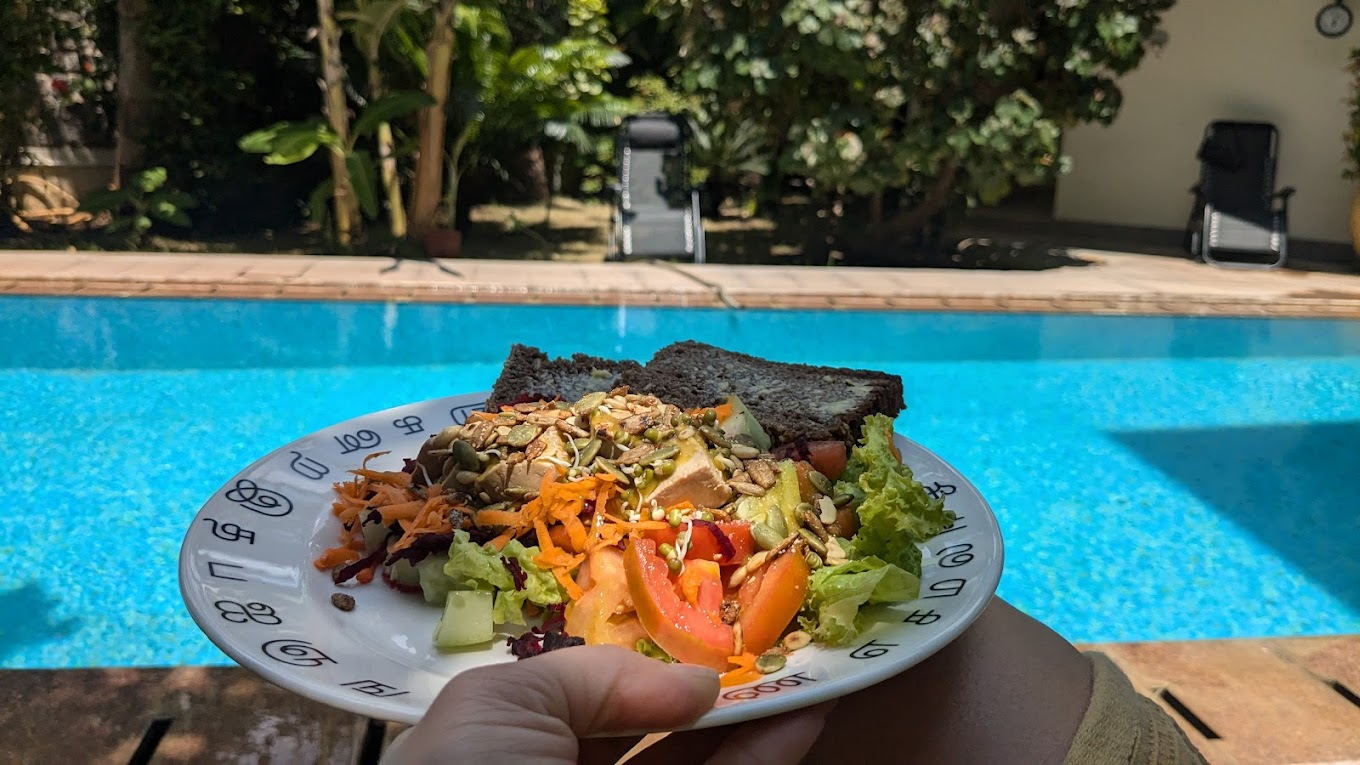
Meals & Dietary Preferences Meals are prepared based on the preferences and arrangements made in advance by the group leader. We collaborate with trusted small restaurants and local home cooks to provide mild, hygienic, and nourishing food—both Indian and Western options are available.

Refreshments & Drinking Water

  • Coffee and tea stations are available 24/7 on both the ground and second floors.
  • All water in the house is filtered and safe for drinking.
  • Refrigerators for group use are located on the ground floor, second floor, and a small one on the roof terrace.
  • Plates and cutlery are available on the ground and second floors for guests who wish to enjoy their own snacks.

Accommodations and Facilities:

Room Types and Amenities

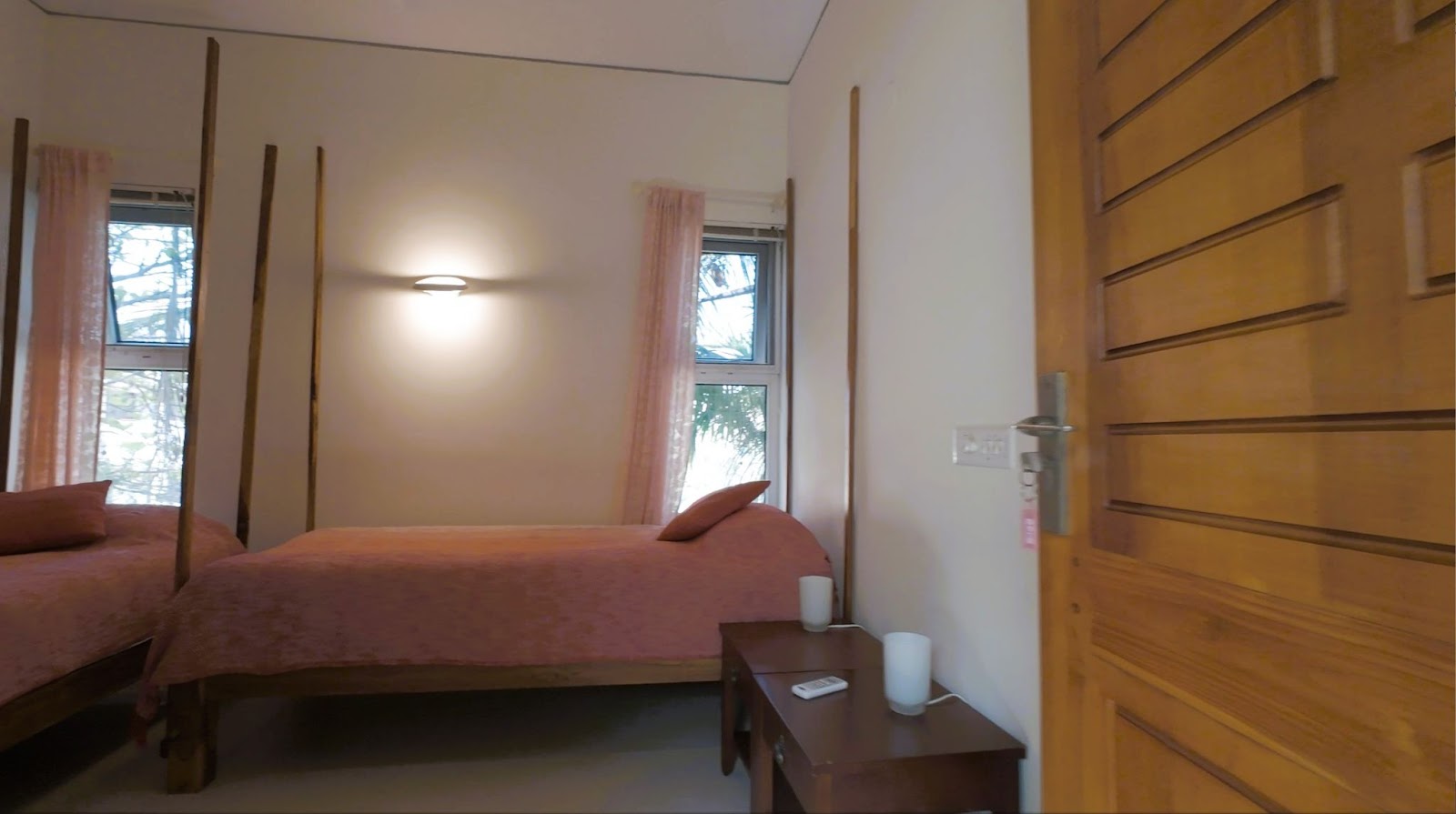
At Sangam Retreat House, our accommodations are  crafted to offer a blend of ease, tranquility, and thoughtful design. Each room invites guests into a peaceful space where simplicity and accessibility harmonize to support restful living. Though the rooms vary in size, the contribution requested from guests remains uniform across all options

Ground Floor Bedrooms

The ground level includes three well-appointed bedrooms,, each offering easy proximity to the swimming pool, dining space, and a welcoming indoor area ideal for small group gatherings.

Second Floor Bedrooms

The second floor is home to seven peaceful bedrooms, complemented by a spacious living room and an outdoor sitting that looks out toward the majestic Arunachala mountain—an inspiring setting for moments of stillness and contemplation.

Flexible Bed Arrangements

  • All rooms are furnished with twin-sized beds, which can be joined to form doubles for couples.
  • Kindly note that some rooms feature fixed layouts and may not support bed adjustments.
  • Occupancy options include single, double, or triple, depending on group needs.

House Layout

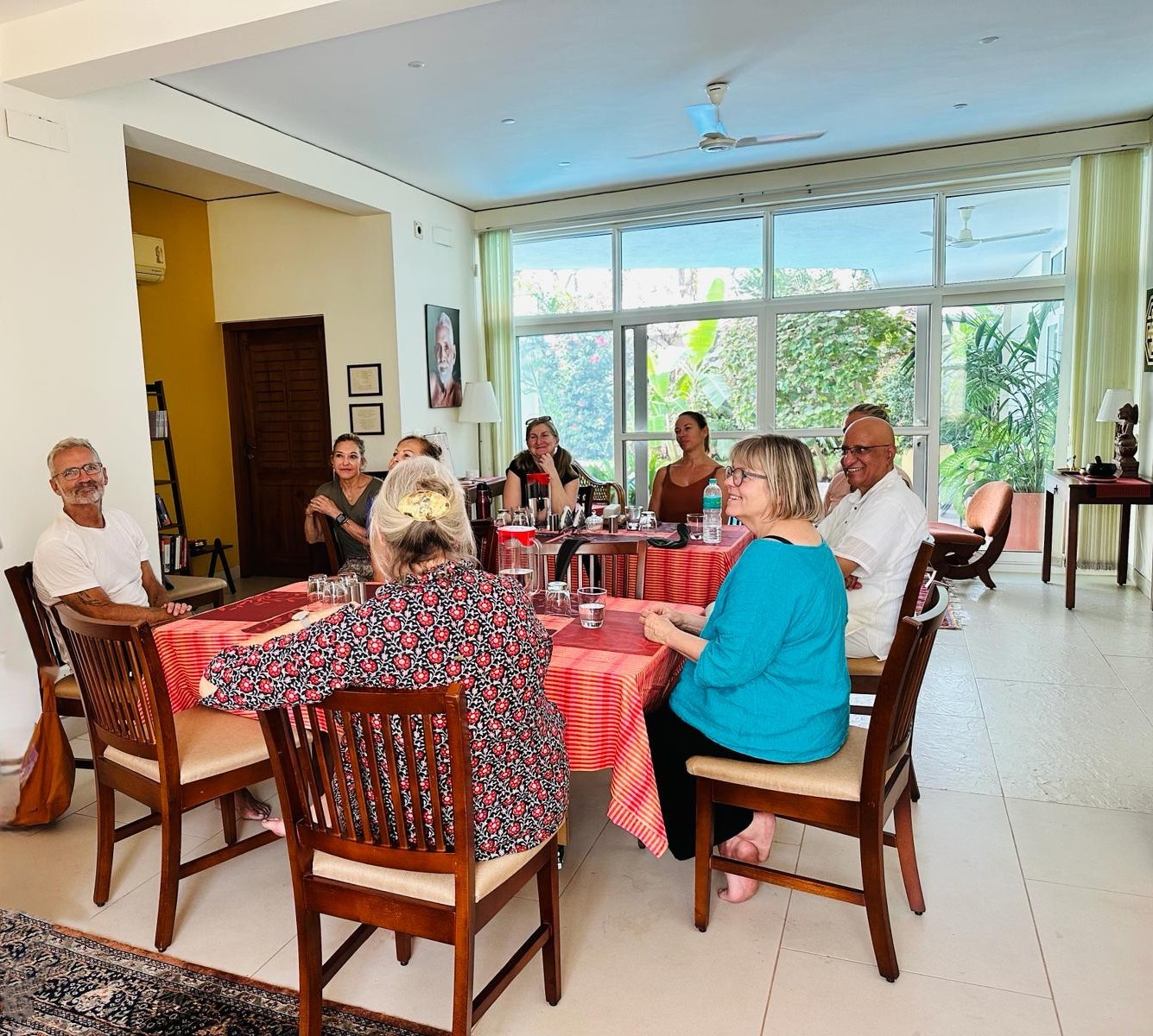
  • Ground Floor: Swimming pool, dining room (also used for small group meetings), and 3 guest bedrooms
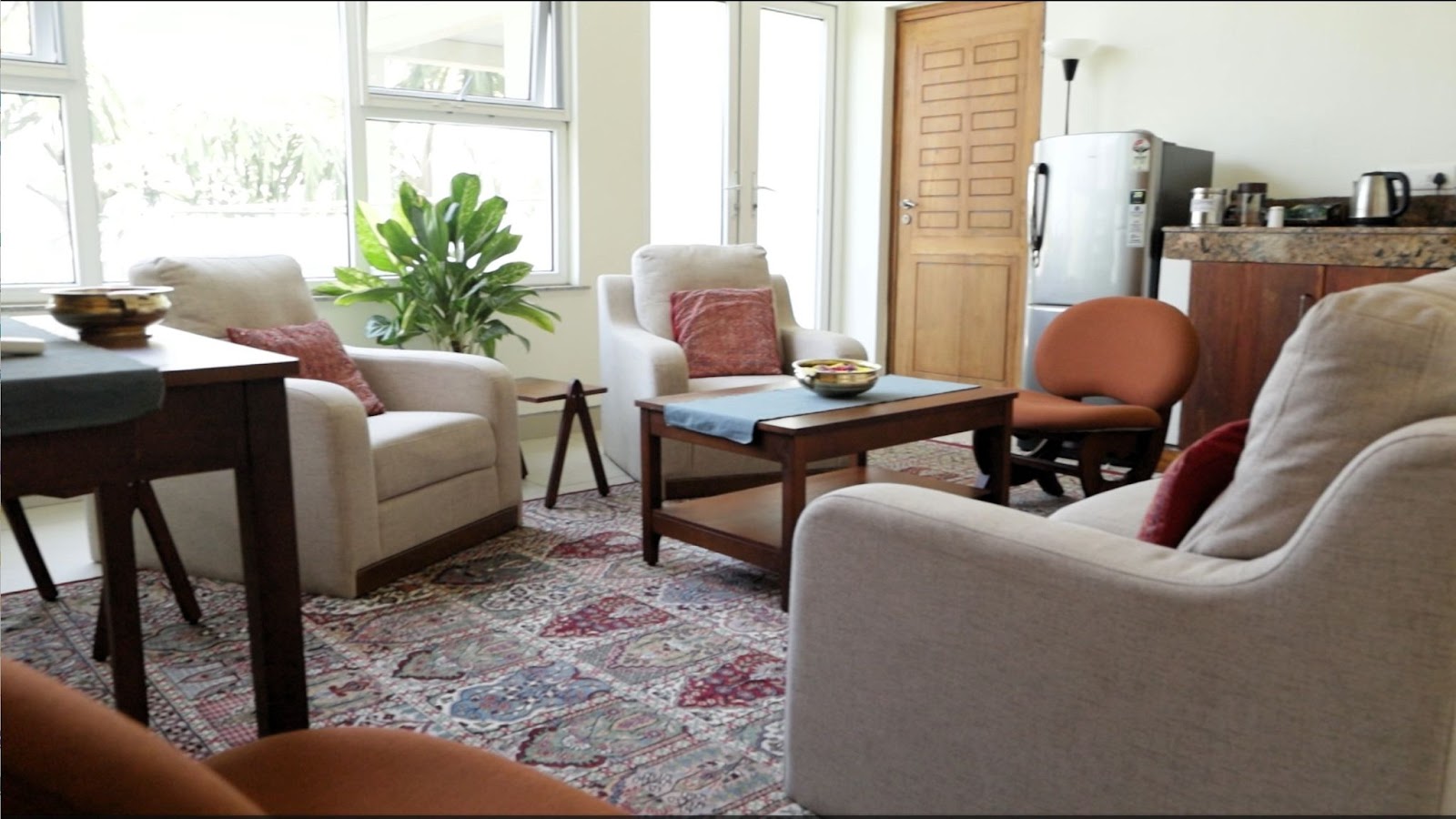
  • Second Floor: Residential guest floor with 7 bedrooms, living room, and outdoor patio
  • First Floor: Private residence of the house owner; not accessible to guests

Amenities

  • Wi-Fi is available throughout the house
  • Each room includes air conditioning, ceiling fans, and optional mosquito nets (all windows are screened)
  • Bathrooms are equipped with showers only
  • Complimentary toiletries: hot water, hair dryers, shampoo, hand wash, and body wash
  • Fresh towels are provided for all guests

Shared Meditative Spaces & Gathering Areas:

Sangam Retreat House offers a variety of serene and spacious areas designed to support your group’s spiritual practices, workshops, and quiet reflection. All shared spaces are included in your stay and equipped to meet the needs of each gathering.

Third Floor Roof Terrace

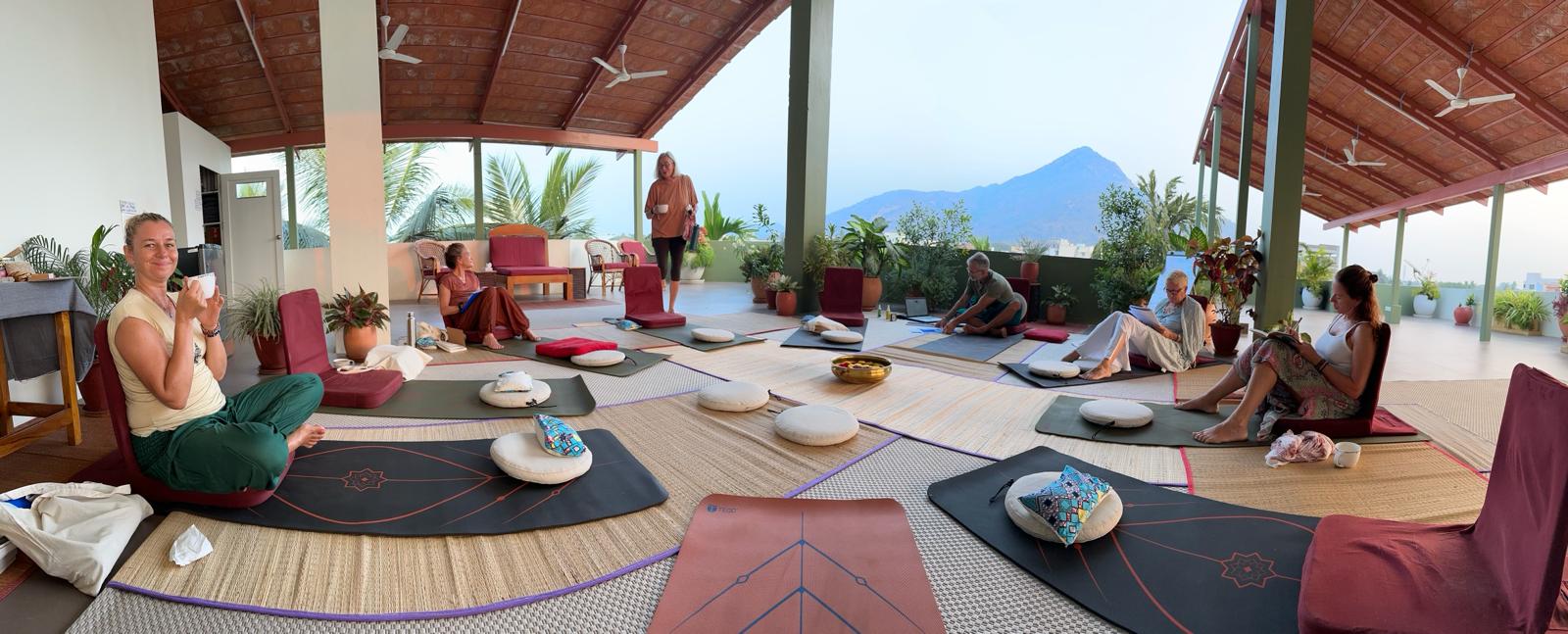
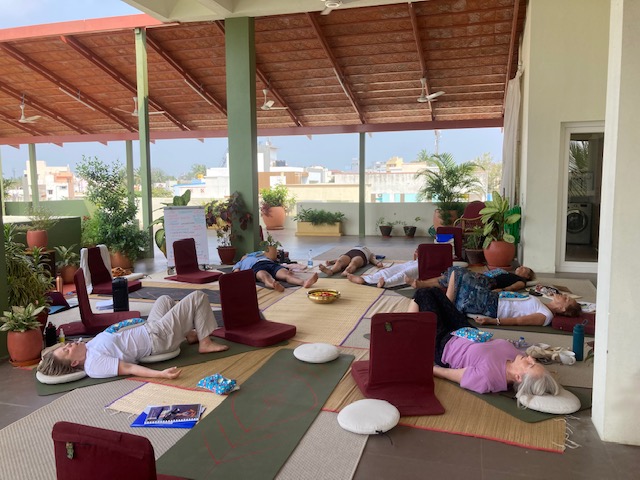
Our expansive rooftop terrace is the heart of many group activities—ideal for satsangs, yoga sessions, and workshops.

  • The tiled open-air space can comfortably host over 100 participants
  • Offers a breathtaking panoramic view of Arunachala, enhancing every moment of practice
  • We provide chairs, yoga mats, cushions, pillows, and blankets so each group can set up their space with ease

Ground Floor Gathering Area

A cozy indoor space overlooking the swimming pool is perfect for smaller group meetings, intimate discussions, or quiet contemplation.

Our library stocks everything from ancient texts to modern mindfulness research. Grab a book, find a cozy corner, and lose track of time.

Outdoor Retreat Spaces

Guests are welcome to enjoy the peaceful veranda, rooftop nooks, and garden areas surrounding the pool—ideal for solitude, journaling, or simply being with nature.

Outdoor Areas & Natural Surroundings:

Sangam Retreat House is just a 10–15 minute walk from the sacred ashrams of Tiruvannamalai. The natural surroundings offer a gentle rhythm that supports both inward reflection and outward exploration.

🌿Local Exploration 

External activities—such as temple visits, nature walks, or cultural outings—are shaped by the interests of each group and typically guided by the group leader’s suggestions. We’re always happy to provide helpful information and local insights whenever needed.

·       Tipping – Tipping in India is more about your gut feeling and there are no rigid guidelines. Check to see if a service charge is already added to your bill. It’s safe to say that the average tip in India is around 10% and depends on the quality of service.

Always have small bills and change on hand to give to the beggars and Sadhus when you feel moved.   There are many in Tiru, and it is not necessary to give to everyone.  10 Rupee bills are always happily accepted or more if you feel so inclined.  If you give to one, you may have many surround you, so be discriminating. 

🛎️ Guest Essentials & Onsite Support:

📶 Wi-Fi & Connectivity Information

We offer Wi-Fi access throughout the main building and common areas, providing a reliable connection for checking emails, staying in touch with loved ones, or handling light online tasks.

🔌 Power & Plug Compatibility

  • Electrical sockets are compatible with UK, US, and Indian plugs
  • Please note: The voltage is 220V
  • 110V devices will require a voltage converter to operate safely

We recommend guests bring any necessary adapters or converters to ensure smooth connectivity during their stay.

♿ Accessibility Features

At Sangam Retreat House, we believe that everyone deserves access to retreat spaces and community. Our facilities are designed to support comfort and ease for guests of all abilities.

Accessible Entry & Movement

  • Ramps have been installed at one of the three entrances to support wheelchair access. While the second floor isn’t reachable by wheelchair, small ramps have been added to ensure guests can enjoy rooftop access with ease.
  • Elevator access is available to the second floor and rooftop terrace
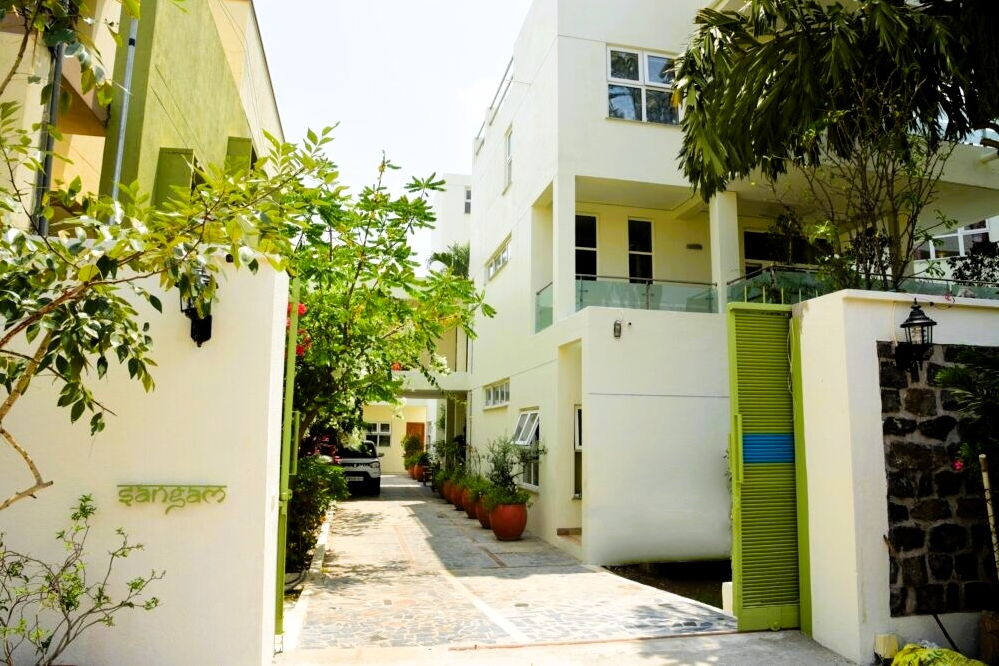
  • Paved, well-lit pathways connect all areas of the property for safe and easy navigation

Inclusive Meditation Spaces

  • In addition to floor cushions, we provide comfortable chairs to ensure everyone can participate fully in group sessions

Supportive Materials

  • All printed materials can be made available in large print formats upon request

If you have specific accessibility needs, please don’t hesitate to reach out. We’re committed to making your stay welcoming, respectful, and fully accommodating.

Daily Retreat Schedule & Group Flow:

Sangam Retreat House honors the diverse and sacred nature of each retreat. There is no fixed daily schedule from our side, as every group brings its own rhythm, practices, and intentions.

Group-Led Structure 

All practical details—such as session timings, activities, and communications—are organized and shared by the group leader.

  • We do not communicate directly with individual participants prior to arrival
  • Group leaders typically coordinate via pre-retreat Zoom calls, emails, and WhatsApp groups
  • Once guests arrive, they follow the schedule curated by their group leader

Our Role: Holding Space & Support

We tailor our meals, housekeeping, and overall support to align with the unique flow of each group. Whether the retreat centers on meditation, yoga, healing, or other modalities, we adapt with care and reverence.

Each retreat is a distinct and sacred journey, and we’re here to quietly support that unfolding.

Practical Information for Your Stay:

House Guidelines for a Peaceful Retreat

To ensure a serene and harmonious experience for all, Sangam Retreat House follows a few simple guidelines. These help maintain the sacred and communal atmosphere that guests value during their stay.

👣 Shoes-Free Living Spaces Please remove your footwear before entering the indoor areas. A dedicated shoe rack is available outside the main house entrance for your convenience.

🚪 Exclusive Retreat Environment Sangam House is a dedicated retreat space, not a guest house. All residents are participants of the same retreat, and we do not accommodate drop-in visitors or outside guests.

🚫 Substance-Free Sanctuary To preserve the purity and peacefulness of the space, Sangam Retreat House is proudly alcohol-free, smoking-free, and drug-free.

⚡ Backup Power Supply In the event of a power outage, we have substantial UPS battery backup installed to keep essential lighting and services running smoothly

🙏 Respecting the Spirit of Sangam House Sangam House is not suitable for tour groups, family gatherings, or wedding parties.

Final Thoughts: Welcoming the Journey Within

A stay at Sangam Retreat House is not just a pause from the outside world—it’s an invitation to gently turn inward. What began as a heartfelt welcome to close friends has blossomed into something far greater—a sacred space open to many.

Every detail, from the rhythm of daily practices to the atmosphere of the rooms, has been lovingly shaped to create a space where healing, reflection, and renewal feel natural. 

Whether you arrive seeking spiritual clarity, emotional balance, or simply a quiet moment to breathe, Sangam House welcomes you with open arms and a grounded heart. 

When you step into this space, you’re not just a guest—you become part of a shared intention for peace, growth, and connection. So come as you are, and let the silence, simplicity, and spirit of Sangam House guide you back to what truly matters.

Categories
Arunachala Blogs Tiruvannamalai

The Significance of Arunachala: Why Tiruvannamalai is a Sacred Destination 

The Mystical Mountain: Understanding Arunachala’s Spiritual Significance

Located in the spiritual heartland of Tamil Nadu’s Tiruvannamalai, the modestly elevated Arunachala—rising just 2,682 feet—is regarded by many as a sacred hill of immense spiritual importance. There’s something about Arunachala that lingers in the soul long after your journey ends. For many, the name sparks curiosity but standing before it reveals something deeper. More than a hill in Tamil Nadu, it is a sacred presence, quietly anchoring seekers in the stillness of the present. Unlike conventional temples built to house stone idols, Arunachala stands uncarved and eternal, never needing consecration or ritual.

For generations, people have revered it as a living embodiment of Shiva—not through form, but as the element of fire itself, eternal and luminous. Legend speaks of Shiva manifesting here as a towering flame to end a cosmic debate—yet the true power of Arunachala isn’t only in the myths, It’s in the hush it casts over your thoughts, the grounding stillness that seems to speak without words. Pilgrims and travelers alike come to walk its perimeter, to sit in meditation, or simply to witness its form beneath the sky. And in doing so, many find a peace that cannot be explained—only felt. Arunachala doesn’t announce its power; it unfolds it slowly, deep within those who are willing to listen.

The Sacred Fire Festival of Karthigai Deepam: 

A Festival of Inner and Outer Illumination

Once every year, Arunachala becomes a beacon of divine fire. The festival known as Karthigai Deepam draws its name from the star Krittika, which is believed to influence spiritual energies during this auspicious time. This alignment of celestial forces is said to create a heightened environment for spiritual growth and self-realization.

According to a tale from the Puranas, the roots of this festival trace back to when Lord Shiva appeared as an endless column of fire to settle a cosmic disagreement that arose between Brahma and Vishnu over who held supremacy. To reveal the truth, Shiva manifested as an endless pillar of fire—so vast it defied measurement. Brahma soared upward in search of its peak, while Vishnu descended to find its base, yet both failed. This revealed that Shiva’s true nature is infinite and beyond human grasp. Arunachala stands as a symbol of that boundless, uncontainable divine presence.

This blazing form is celebrated as the Tejo-Linga, or the light-form of Shiva. The version of Shiva known as Ardhanarishvara, half-male and half-female, symbolizes the union of cosmic masculine and feminine energies. Karthigai Deepam honors this sacred vision and the eternal flame it represents.

Every year during the Tamil month of Karthigai (November–December), this flame is physically symbolized by lighting a large cauldron of oil and ghee-soaked wicks on the top of Arunachala. This sacred fire is the Maha Deepam, visible from miles, burning through the night like a cosmic reminder of the formless divine.

But the celebration begins earlier in the day. Before sunrise, in the inner sanctum of Annamalaiyar Temple, a sacred lamp called the Bharani Deepam is kindled—not with modern fire but by ancient fire-making methods through friction. This fire represents tapas—spiritual discipline—and the inner spark of awakening. As evening falls, the atmosphere becomes electric with devotion. Pilgrims and townspeople gather, their eyes turned to the summit. When the massive flame is lit atop the hill, it is as if Arunachala itself becomes a column of divine light. The mountain, the sky, and every beating heart are touched by Shiva’s presence.The celebration stretches over ten days. The temple town transforms into a vibrant field of devotion. Sacred processions of the Pancha Murthis—five divine forms of Shiva and Shakti—move through the streets to the sound of traditional drums and chants. At night, lamps glow on doorsteps and in shrines, symbolizing the divine presence within each soul.

The Skanda Upapurana praises this festival and speaks of liberation for those who witness the Deepam flame. This fire is more than light—it is a symbol of the divine Self within us all. Every flickering lamp reminds us: You are Light. You are That.

Saints like Ramana Maharshi saw Deepam not as a mere ritual but as a profound spiritual symbol. In silent reverence, they watched the flame and became one with its meaning. For those in Tiruvannamalai and for seekers across the world, Karthigai Deepam is not just a tradition—it is a reminder that even when the world seems dark, the flame of truth and divinity never fades. Arunachala promises that the light is always present—within and without.

Walking the Sacred Path: The Significance of Girivalam at Arunachala

At Arunachala, even the moon seems to bow in reverence. The practice of Girivalam—the act of walking around the sacred hill—holds deep spiritual and cosmic importance, especially during the Full Moon (Poornima) and the festival of Deepam. Rooted in the ancient verses of the Skanda Purana, this timeless tradition blends myth, astrology, and devotion, turning the physical act of walking into a journey of divine connection.

Many first-time pilgrims are struck not only by the natural beauty along the 14-kilometre path, scattered flanked by banyan trees, roadside shrines and small temples, but also by the simplicity of the practice itself. Girivalam does not demand elaborate rituals or offerings. All it requires is one’s presence, each step becoming an act of release—letting go of burdens, thoughts, and attachments that no longer serve.

On any given full moon night, the path around Arunachala fills with people from all walks of life. Some walk in meditative silence, others chant mantras, and many simply absorb the energy of the sacred environment. Among them are families with children, monks in saffron robes, and elderly pilgrims who have likely performed this walk countless times over the years.

The journey around the hill fosters a deep connection to nature. Pilgrims often become acutely aware of the smallest details—the breeze through the trees, the crunch of gravel underfoot, the dance of sunlight across ancient rocks. Arunachala feels alive, not merely as a landscape, but as a living presence. There’s a quiet stillness that pervades the walk, a kind of silence that affirms everything is in its right place.

For centuries, this sacred circumambulation has remained a profound expression of devotion, humility, and unity with Arunachala—the hill that is worshipped as Shiva himself.

Ramana Maharshi: The Sage Who Amplified Arunachala’s Fame

Discovering the life of Sri Ramana Maharshi is often like stumbling upon a hidden treasure of spiritual insight. What makes his journey so relatable is its simplicity and authenticity. He wasn’t a distant, mystical figure lost in ancient scriptures—his path began when he was just a regular teenager, facing the same existential fears and questions that confront many at some point in life.

The defining moment in Ramana’s life occurred at the young age of sixteen. Alone in his room, he was suddenly gripped by an intense awareness of his own mortality. But instead of reacting with fear or distraction, he responded with rare courage. He lay down, closed his eyes, and consciously examined the experience of death. In doing so, he let go of his identification with the body and mind—only to realize that a deeper presence remained. That presence was pure awareness, untouched by death or time.

Soon after this inner awakening, Ramana left his family without a word and journeyed to Arunachala. He didn’t explain himself, nor did he have a plan—he was simply drawn there with an inner certainty. Once he arrived, he never left. For Ramana, Arunachala wasn’t just a pilgrimage site; it was his spiritual anchor, his guide, and ultimately his home.

He spent years in solitude, meditating in the caves of Arunachala, living a life stripped of comfort, and speaking only when necessary. He wasn’t seeking fame, followers, or recognition. His only aim was to remain in that silent, undisturbed awareness he had discovered within. Yet, despite his quiet nature, people began to gather around him. They were drawn to the peace he radiated and sought his guidance. Ramana, always gentle and clear, offered his insights with compassion.

To him, Arunachala wasn’t just a sacred landscape—it was the living presence of divine grace. He often spoke of the hill as a true spiritual teacher, one that communicated through silence. In his own words, “Arunachala is the best and most reliable teacher. If you sit quietly near it, it will teach you everything you need to know.”

What stands out about Ramana Maharshi’s life is how approachable and grounded it feels. He didn’t preach complex doctrines or insist on elaborate rituals. His teaching was direct and universal: turn inward, be still, and discover the truth of who you are. And for him, Arunachala was the perfect support in that sacred journey inward.

Sri Ramanasramam: A Living Legacy of the Sage

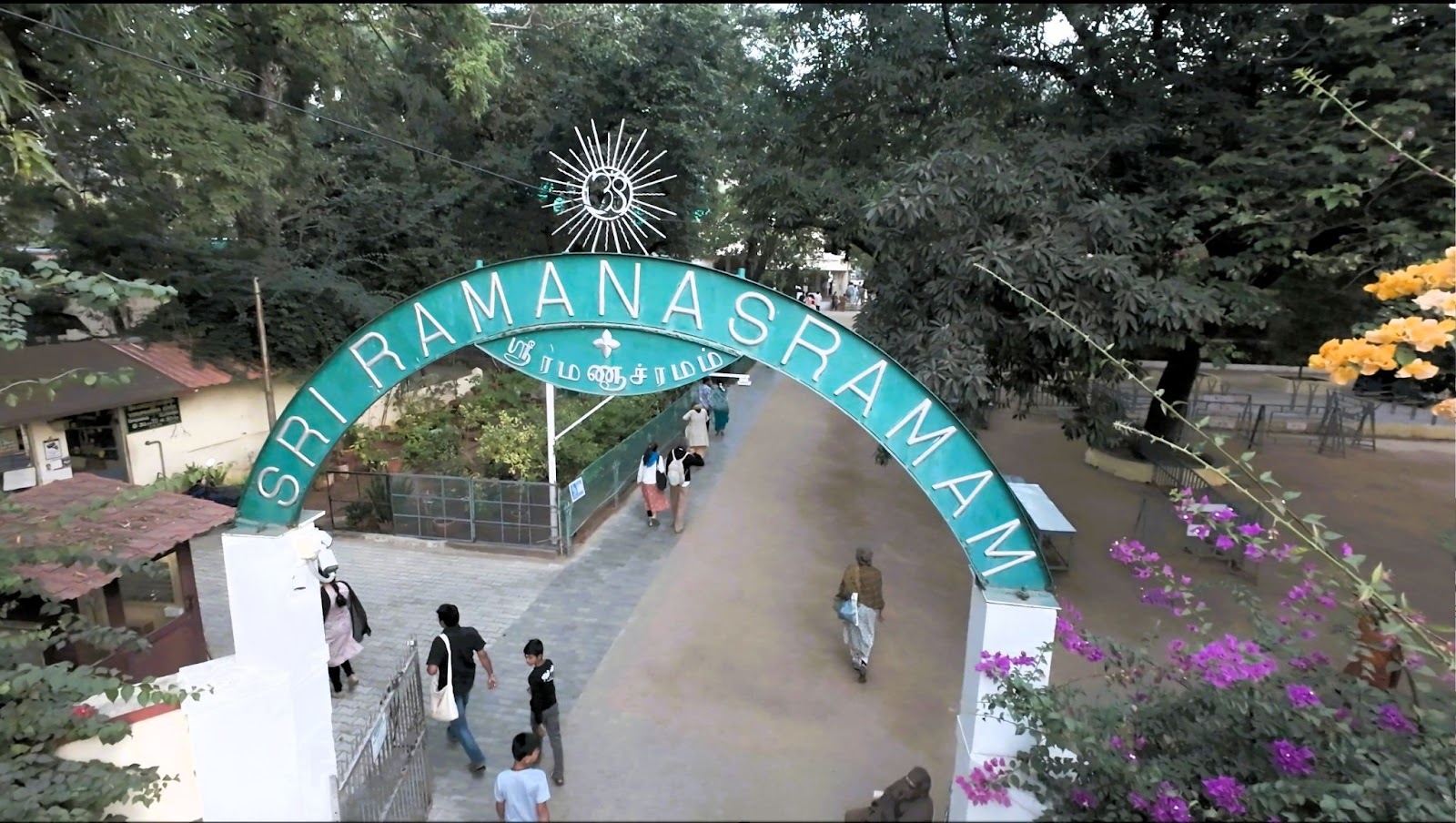
One of the most striking aspects of Sri Ramanasramam is its deep and ever-present connection to Arunachala. From nearly every corner of the ashram, the sacred hill can be seen standing tall in the background—a quiet, powerful presence that echoes Ramana Maharshi’s teaching that Arunachala is the true guru, silently guiding all who seek. Visitors to the ashram are often drawn not only to its peaceful atmosphere but also to the mountain itself. Many take time to hike up to the caves where Ramana spent years in deep meditation, while others engage in Girivalam—the sacred walk around the hill—as part of their spiritual journey. The bond between the ashram and Arunachala continues to inspire seekers from around the world, just as it did during Ramana’s lifetime.

A Modern Pilgrimage: Experiencing Tiruvannamalai Today
 

Even today, Arunachala stands as a powerful hub of spiritual energy, attracting millions of devotees and travelers each year. The mountain’s significance has reached far beyond India, largely due to the worldwide influence of Sri Ramana Maharshi’s teachings. Spiritual seekers from across the globe make their way to Tiruvannamalai, drawn by the magnetic presence of Arunachala and Sri Ramanasramam. Whether inspired by legend, history, or an inner calling, visitors find here a source of peace, clarity, and profound inner guidance.

Arunachala is the Self. Meditating on it removes all doubts and reveals the truth of existence. 

Sri Ramana Maharshi