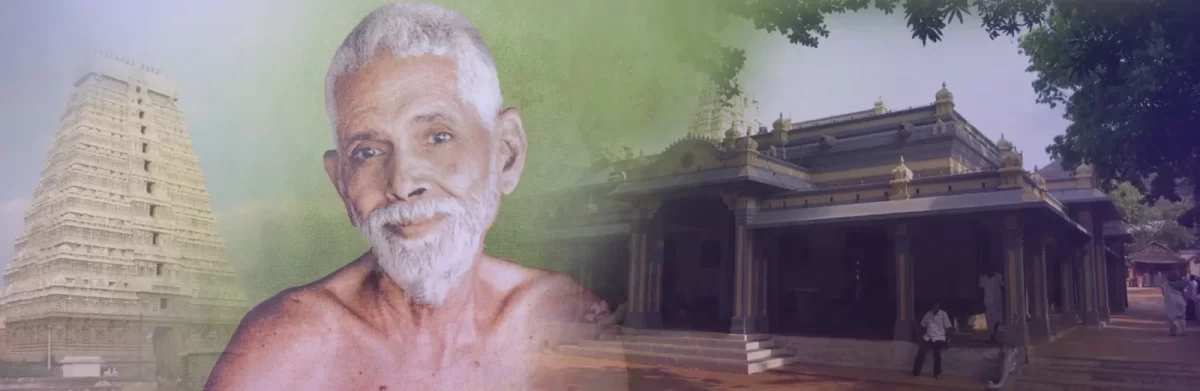

Sangam Retreat House – where there is a rhythm that slows the pulse of time; where your arrival feels less like checking in and more like coming home to yourself. You’ve booked your stay, packed your bags, and set your intention—but there’s still that flutter of uncertainty: What really happens when I get there? This guide walks you through the experience—from the moment you drive to our sanctuary to the details that inspire guests to return year after year.
You may arrive with questions or simply with the need to pause. And as you step into our sanctuary, something shifts. The mountain watches in silence. The air carries stories. And the space—spacious, serene, sacred—begins to hold you. Our returning guests often call it their “reset button.” And yes, many get emotional when they speak of the mountain view that can move people to tears.
This guide is an attempt to provide guests with everything they need in terms of logistics and planning ahead for Retreat in Tiruvannamalai, South India. So what unfolds during those transformative days? Let’s take you inside.
Before You Arrive Essential Preparations:
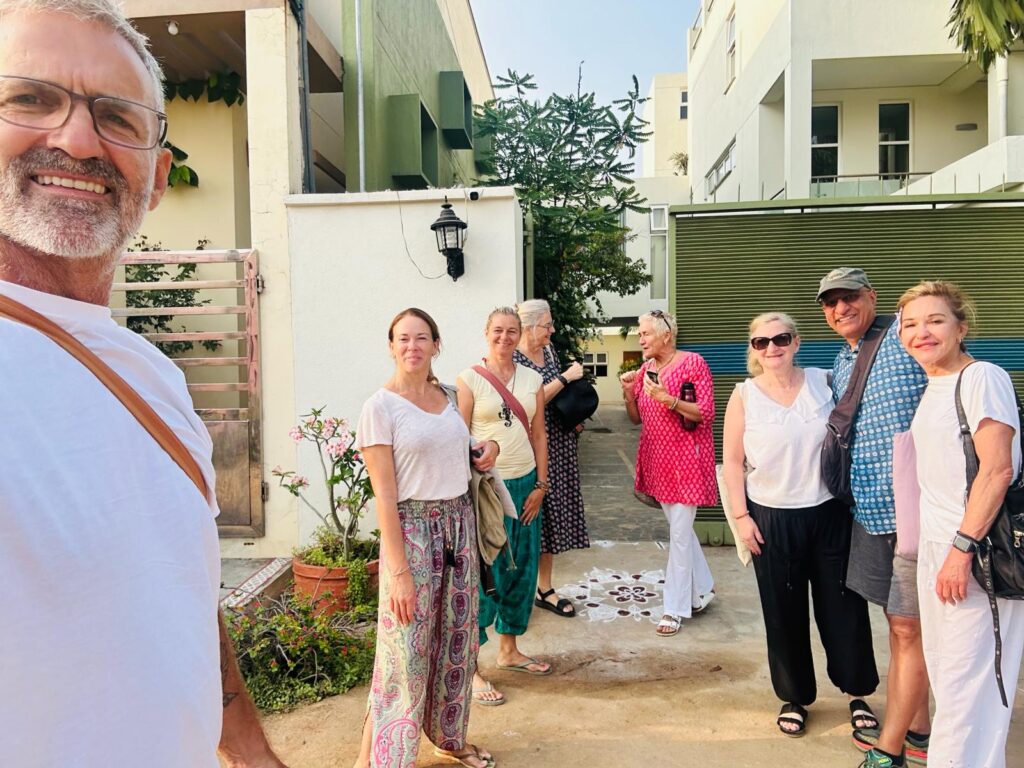
Booking and Reservation
Reserving your space at Sangam Retreat House is simple —just visit www.sangamhouse.com and fill out our contact form. Once submitted, a member of our team will reach out shortly to assist you with the next steps. We recommend booking early to ensure a smooth experience — Sangam House tends to fill quickly during the winter season.
Making Travel Arrangements
· You need a passport that is currently valid for at least 6 months.
· You must obtain a travel visa to India (tourist visa) by completing an on-line application. Go to evisa and follow instructions for tourist visa.
What to Pack for Your Retreat
Packing for Retreat isn’t quite like prepping for a typical vacation. Comfort, modesty, and mindfulness are your guiding principles. Here’s what to bring:
Weather and Clothing
· In South India during your trip it will be comfortable weather, with rain unlikely but possible. The average maximum temperatures are 300 C / 860 F during the day in December / January; minimum average temps are 200 C / 680 F.
· In the sun, the days will be warm, so plan to have clothes that will allow you to be appropriately covered but not hot. At night it may be cool, so you may need some kind of sweater/vest/shawl and sleepwear that is warm. It is suggested to wear loose, layered, comfortable clothing, covering the legs, and if sleeveless, a scarf or shawl. Light, breathable attire is suggested for daily asana practice and yoga.
Respectful temple wear – In Tiruvannamalai’s sacred spaces, modesty matters. Clothing should cover the chest, shoulders, and legs. For women, sleeves are encouraged, and trek-friendly outfits should still honor local customs.
Shoes for specific activities: Sturdy walking shoes or trainers are ideal for nature walks, travel days, and exploring the hillside. Flip-flops or sandals work well for indoor communal spaces and moments of ease.
- Crocs are good because they are waterproof, easy to wash, and can slip on and off easily
- Also consider that your footwear should not be too valuable, as shoes may be left outside in shared areas.
Money
Traveler’s checks will not be much use in India, and credit cards will not be as uniformly accepted as you are used to in the US or even many other countries. Upon leaving for India, ensure that you have sufficient available cash to withdraw and/or bring with you. There will be ATM cash machines at the airport when you arrive to get cash in Indian rupees. One can also choose to bring other currencies and change to rupees in Tiruvannamalai or get rupees from ATM machines here. Please be advised that there is only one ATM machine near Ramana Ashram, there is often a long line, and sometimes they are out of cash. It is suggested to bring credit and debit cards and some cash, so you have several options.
It is also VERY important to let your bank know the period of your stay in India so that they do not suspect fraudulent activity and stop your ATM/credit card, and therefore your access to money.
Cell phone
It is fairly easy and inexpensive to get 1 month of international roaming just for texting. You can also bring an unlocked cell phone which takes a sim card, and for a small amount get a local sim card on the first day, with enough “pay as you go” credit to last the trip.
On your arrival at Sangam House, an emergency number will be provided so that anyone in the group can be contacted if necessary in an emergency. Feel free to give this number to your loved ones and work colleagues for emergency calls only. This number will only work during the days of Retreat.
Other Items
- Mosquito repellent that is natural and non-toxic / non-scented. (Vibhuti (sacred ash) works well. It is the sunscreen of the yogis!)
- Several passport size photos of yourself, several photocopies of the picture page of your passport, and your visa / evisa for India.
- A torch/flashlight with the widest beam is important for navigating at night.
- Batteries that last long and are light (e.g. lithium).
- Sun protection – Sunscreen will be needed, perhaps natural and non-toxic as for baby skin. The suggestion to avoid toxic products is not only for yourself but for the benefit of all traveling together, especially those with sensitivities and allergies.
- Hat and/or sunglasses for sun protection, especially when walking on the mountain.
- Reusable water bottle – A water bottle is essential. Even though you will be provided with high quality water in the Retreat House, you need to carry your own bottle to ensure you have enough water at all times, especially on the mountain.
- Neti pots are highly recommended to remove pollutants, using packets of Himalayan salt for nasal cleansing solution.
- A money belt that is light and goes around the waist is suggested so that important documents and money are easily accessible and secure.
- Journal and pen – For internal reflection and writing during retreat.
- Daypack or small backpack that can be taken on walks, especially on the mountain. Note that you will not want to bring a purse that cannot be carried across the chest. Purses are easy to grab off one’s shoulders when walking and distracted.
- Protein bars are essential to sustain yourself during long days. Bring plenty for the whole trip (and some variety) because they are not easily available in India.
- Charcoal tablets (very helpful to have on hand for any cases of stomach disturbance)
- Large and small ziplock bags are very useful to keep things clean and dry.
- An inexpensive watch or small travel clock is helpful to be able to honor the commitment to be on time while not using cell phones in the Retreat space.
- Electrical adapters are needed for India. Voltage is 220 in India, so 110 voltage devices cannot be used.
- All electrical plug sockets at the Retreat house are of a newer type and will accept IN, US and UK plugs.
- Swimwear – For relaxing dips in our in-house pool.
Optional Items
· A light waterproof jacket or poncho in case of rain.
· Meditation cushion – Extra cushioning or padding if needed/desired to support the back and/or seat, especially for sitting on the mountain
· Vitamins / supplements, tampons and any medications you normally take at home
· Ear Plugs – We recommend bringing your preferred earplugs —There may be a chorus of stray dogs barking at night!
What not to bring
Please pack as lightly as possible. At certain moments, you may have to carry your luggage for a short distance, so you will be very happy to bring the least amount possible and not be weighed down by a heavy bag. It is better to pack light than to have too much to carry.
· Bring as little jewelry as possible and nothing expensive, most notably, for example, your valuable watch.
· Avoid too many clothes, especially heavy cotton and denims that won’t dry quickly and will be too warm.
· Do not bring too many books. Even though you might imagine reading extensively, heavy books will weigh you down considerably. Books are also extremely cheap in India. And you will find things in India that you might not find elsewhere.
· Please do NOT bring or wear perfume or scented lotions. This is very important out of respect to others. You will be in close proximity with others in the group and also sharing rooms. One may wish to find some unscented natural deodorants that are not only non-toxic to others, but also good for one’s own health
· No need to bring yoga mats and hairdryers (bulky and are provided at the Retreat house.)
You will receive an information sheet on arrival at the Retreat house with addresses and contact information for all the relevant places in Tiruvannamalai.
Transportation Options to Sangam Retreat House:
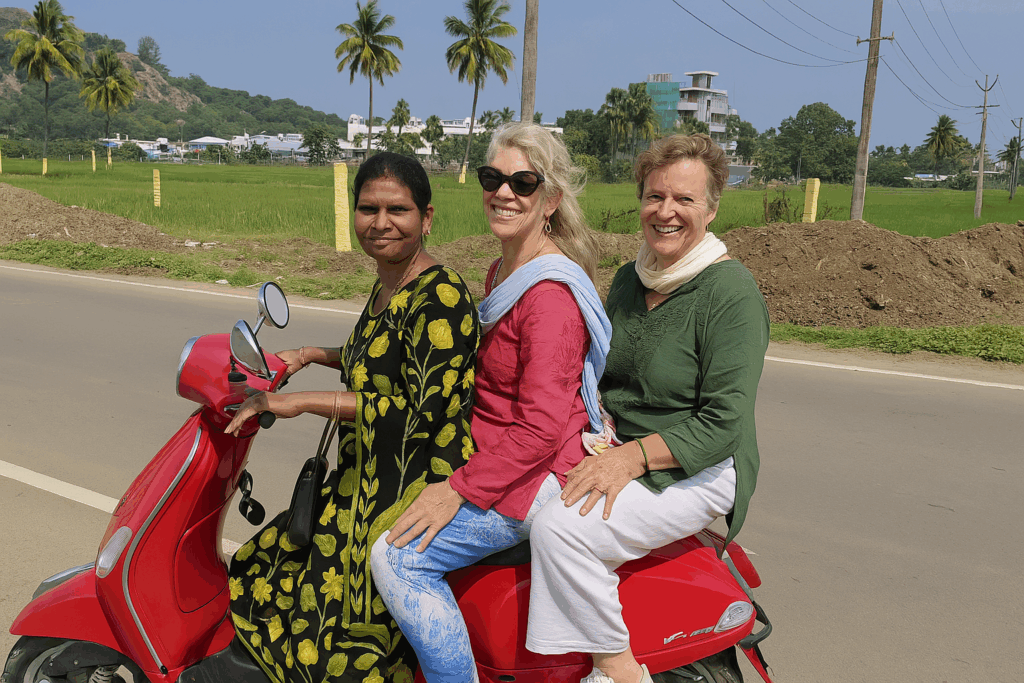
Group leaders who are familiar with Tiruvannamalai often prefer to use their own trusted contacts for services such as transport, auto rickshaws, massages, tour guides, restaurants, and currency exchange. For those new to the area, we’re happy to offer guidance and connect them with dependable local services. (Information sheet available at Sangam House)
Arrival Patterns Some groups arrive together on the same flight and travel by bus to the retreat. However, most guests arrive individually from various directions—Bangalore, Chennai, or Trichy—via private cars at different times. Others may already be in Tiruvannamalai and arrive by auto.
Welcoming Guests It’s rare for all guests to arrive at once; arrivals typically occur throughout the day. To ensure a warm welcome, we coordinate closely with the group leader, who provides us with an arrival schedule. Room allocations are usually handled in advance by the group leader, though some prefer to finalize them upon arrival.
Registration Process As part of the check-in process, we complete the official arrival registration (C-form). For this, we kindly request guests to share their passport and visa details.
Health & Dietary Comforts at Sangam Retreat House:
At Sangam Retreat House, we strive to create a nurturing and homelike environment. Your group will have exclusive use of the house, allowing for a sense of togetherness and privacy that feels more like living in a shared home than staying in a hotel or resort.
Housekeeping & Laundry Our dedicated staff take care of all meal service, cleaning, and dishes. We also offer complimentary laundry service (excluding ironing). Housekeeping is thoughtfully scheduled during group sessions or outings to ensure minimal disruption and maximum privacy.
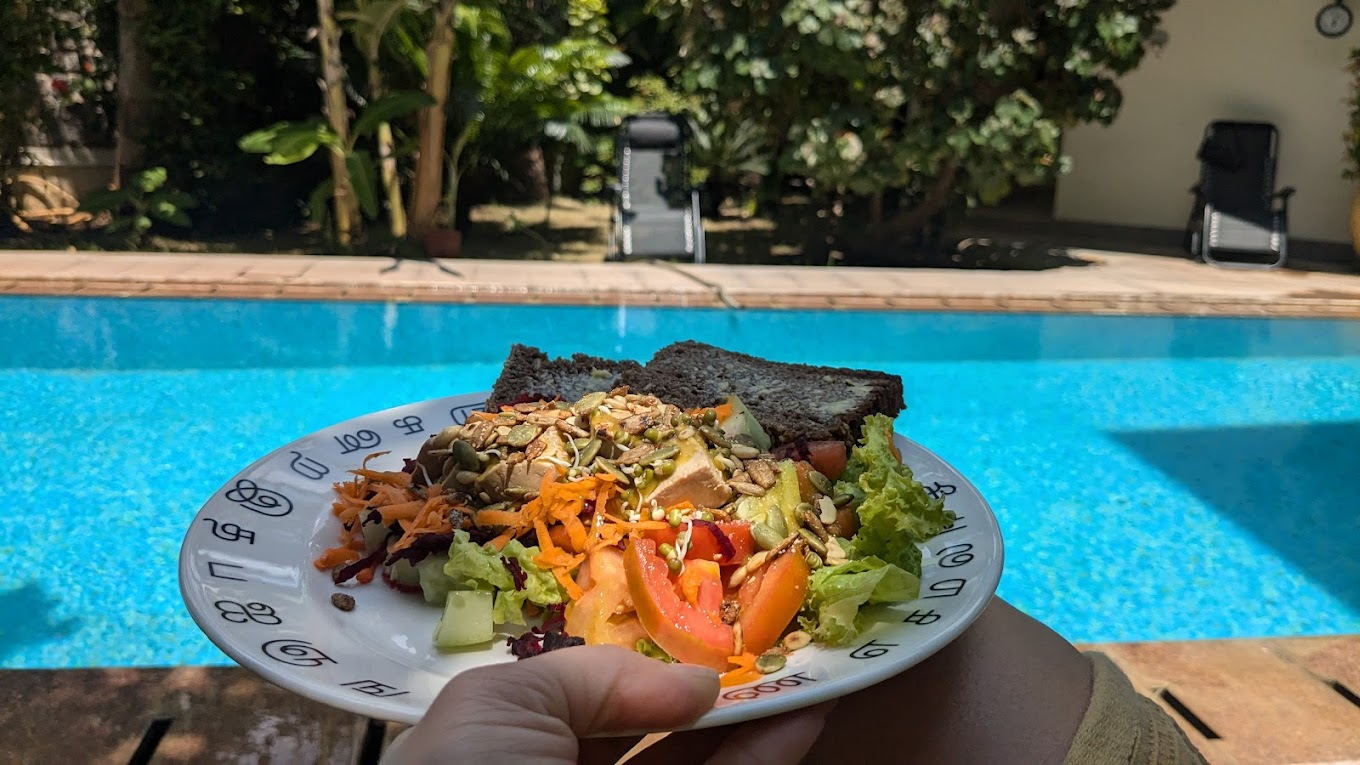
Meals & Dietary Preferences Meals are prepared based on the preferences and arrangements made in advance by the group leader. We collaborate with trusted small restaurants and local home cooks to provide mild, hygienic, and nourishing food—both Indian and Western options are available.
Refreshments & Drinking Water
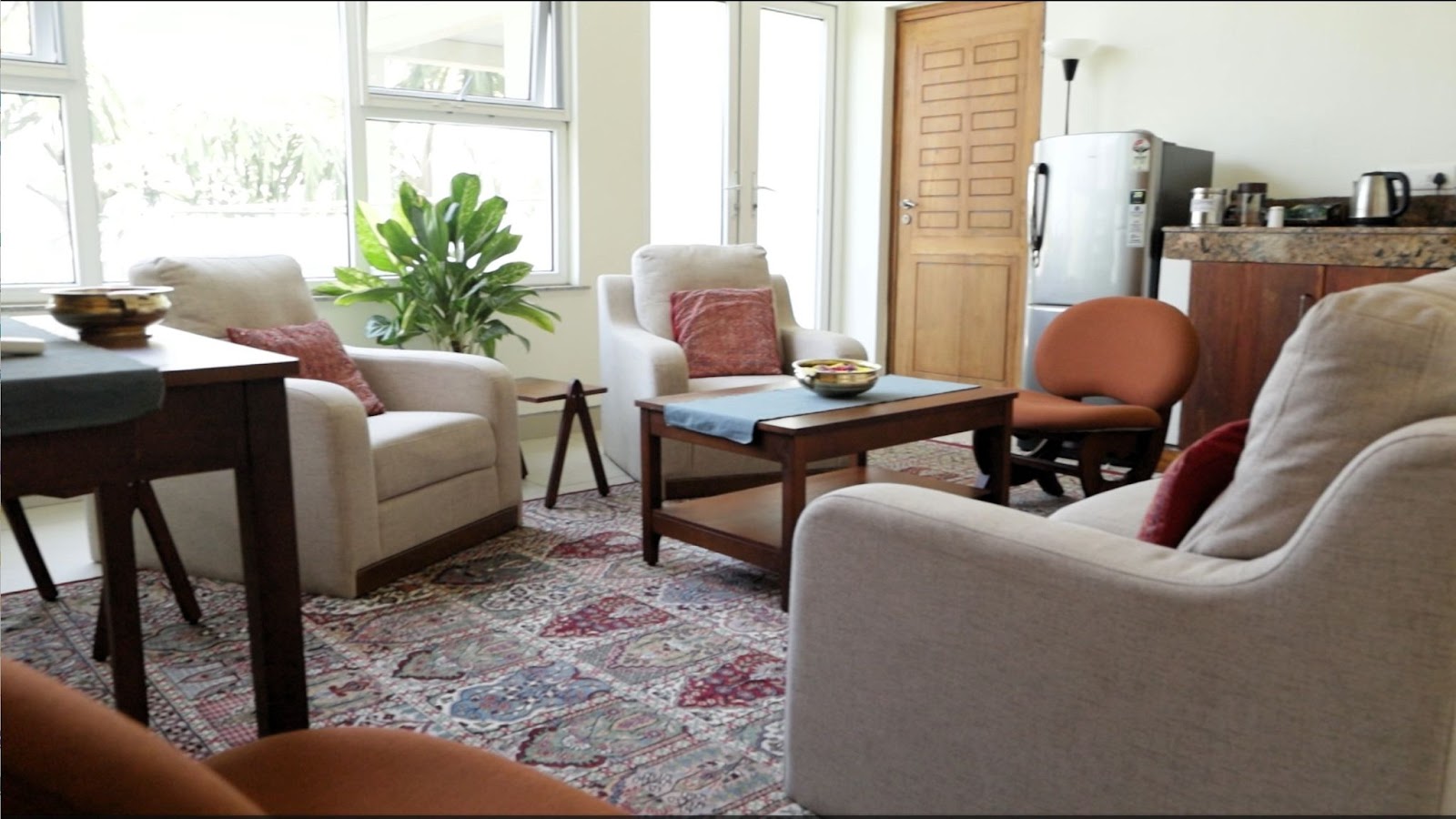
- Coffee and tea stations are available 24/7 on both the ground and second floors.
- All water in the house is filtered and safe for drinking.
- Refrigerators for group use are located on the ground floor, second floor, and a small one on the roof terrace.
- Plates and cutlery are available on the ground and second floors for guests who wish to enjoy their own snacks.
Accommodations and Facilities:
Room Types and Amenities
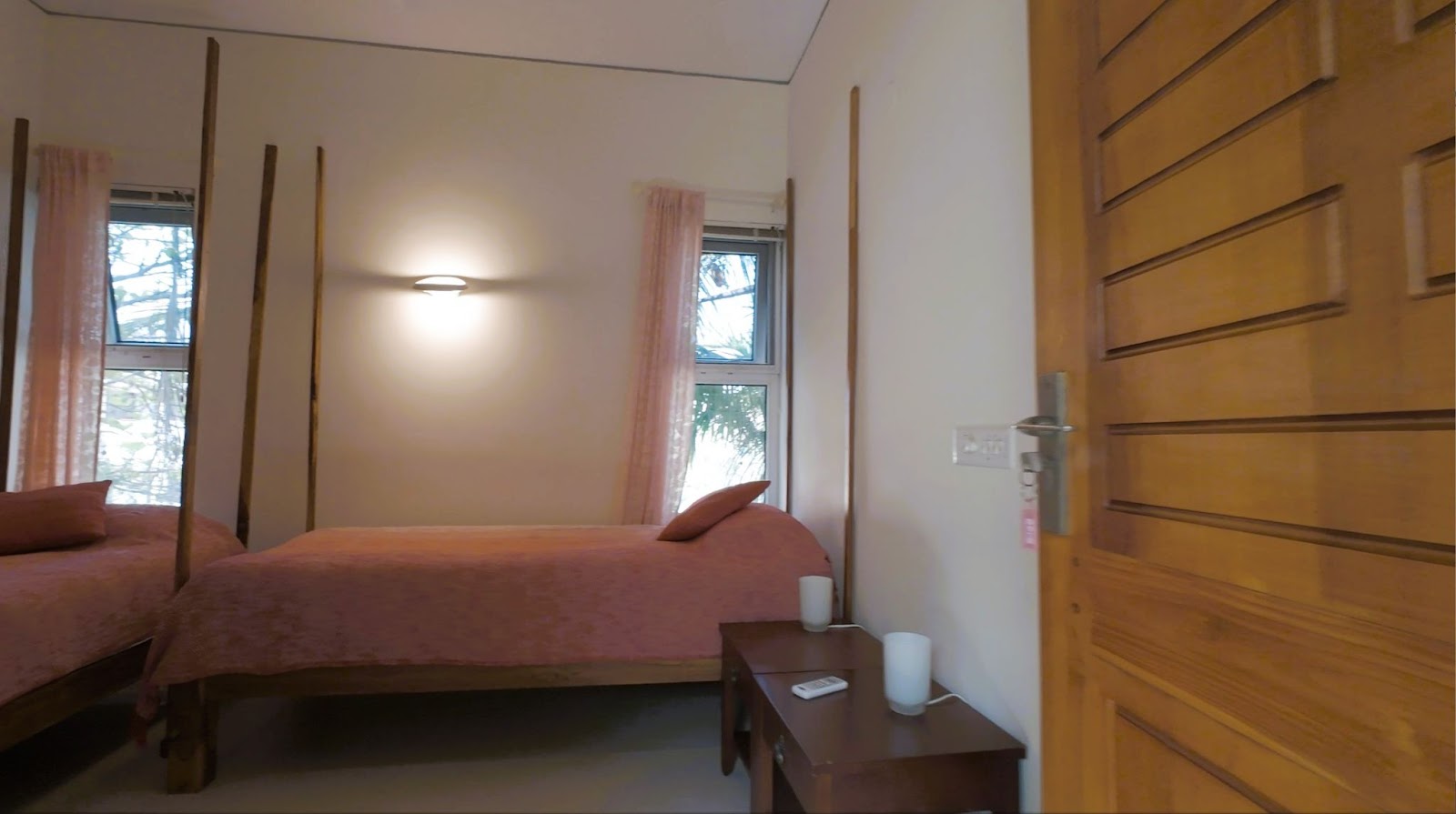
At Sangam Retreat House, our accommodations are crafted to offer a blend of ease, tranquility, and thoughtful design. Each room invites guests into a peaceful space where simplicity and accessibility harmonize to support restful living. Though the rooms vary in size, the contribution requested from guests remains uniform across all options
Ground Floor Bedrooms
The ground level includes three well-appointed bedrooms,, each offering easy proximity to the swimming pool, dining space, and a welcoming indoor area ideal for small group gatherings.
Second Floor Bedrooms
The second floor is home to seven peaceful bedrooms, complemented by a spacious living room and an outdoor sitting that looks out toward the majestic Arunachala mountain—an inspiring setting for moments of stillness and contemplation.
Flexible Bed Arrangements
- All rooms are furnished with twin-sized beds, which can be joined to form doubles for couples.
- Kindly note that some rooms feature fixed layouts and may not support bed adjustments.
- Occupancy options include single, double, or triple, depending on group needs.
House Layout
- Ground Floor: Swimming pool, dining room (also used for small group meetings), and 3 guest bedrooms
- Second Floor: Residential guest floor with 7 bedrooms, living room, and outdoor patio
- First Floor: Private residence of the house owner; not accessible to guests
Amenities
- Wi-Fi is available throughout the house
- Each room includes air conditioning, ceiling fans, and optional mosquito nets (all windows are screened)
- Bathrooms are equipped with showers only
- Complimentary toiletries: hot water, hair dryers, shampoo, hand wash, and body wash
- Fresh towels are provided for all guests
Shared Meditative Spaces & Gathering Areas:
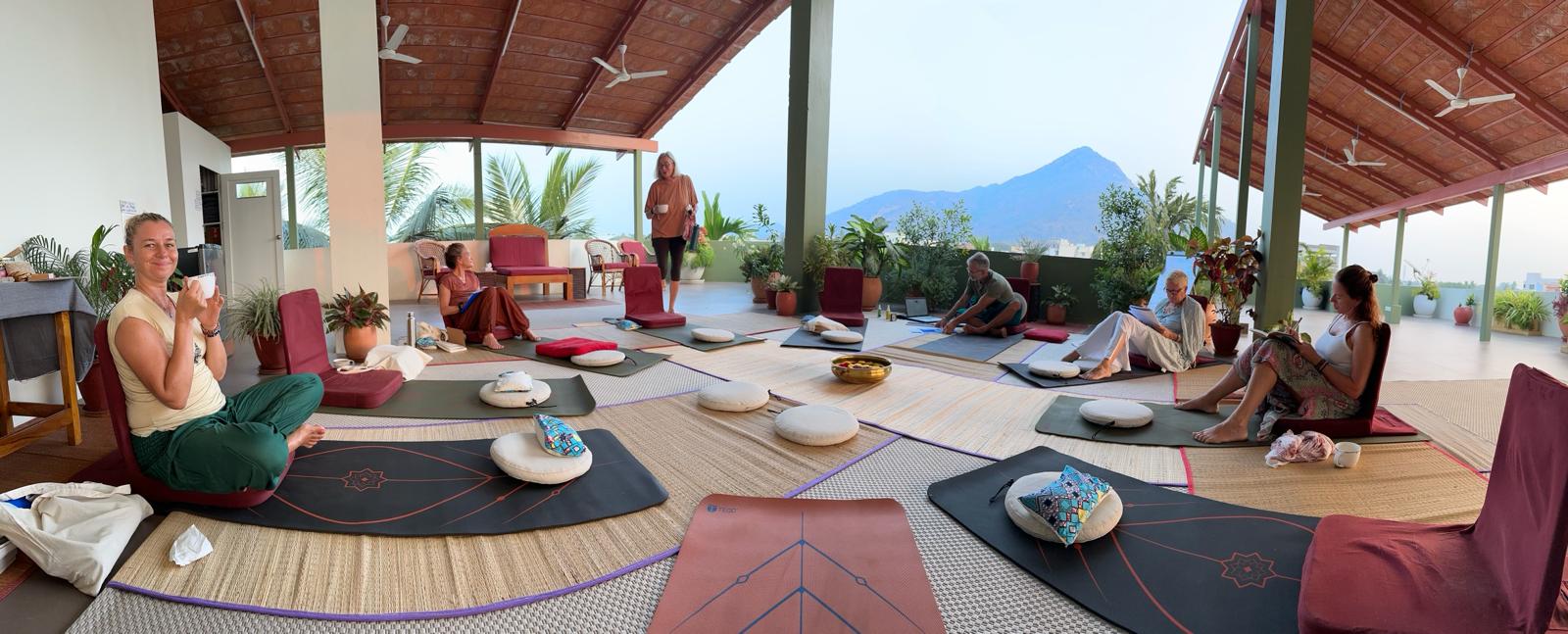
Sangam Retreat House offers a variety of serene and spacious areas designed to support your group’s spiritual practices, workshops, and quiet reflection. All shared spaces are included in your stay and equipped to meet the needs of each gathering.
Third Floor Roof Terrace
Our expansive rooftop terrace is the heart of many group activities—ideal for satsangs, yoga sessions, and workshops.
- The tiled open-air space can comfortably host over 100 participants
- Offers a breathtaking panoramic view of Arunachala, enhancing every moment of practice
- We provide chairs, yoga mats, cushions, pillows, and blankets so each group can set up their space with ease
Ground Floor Gathering Area
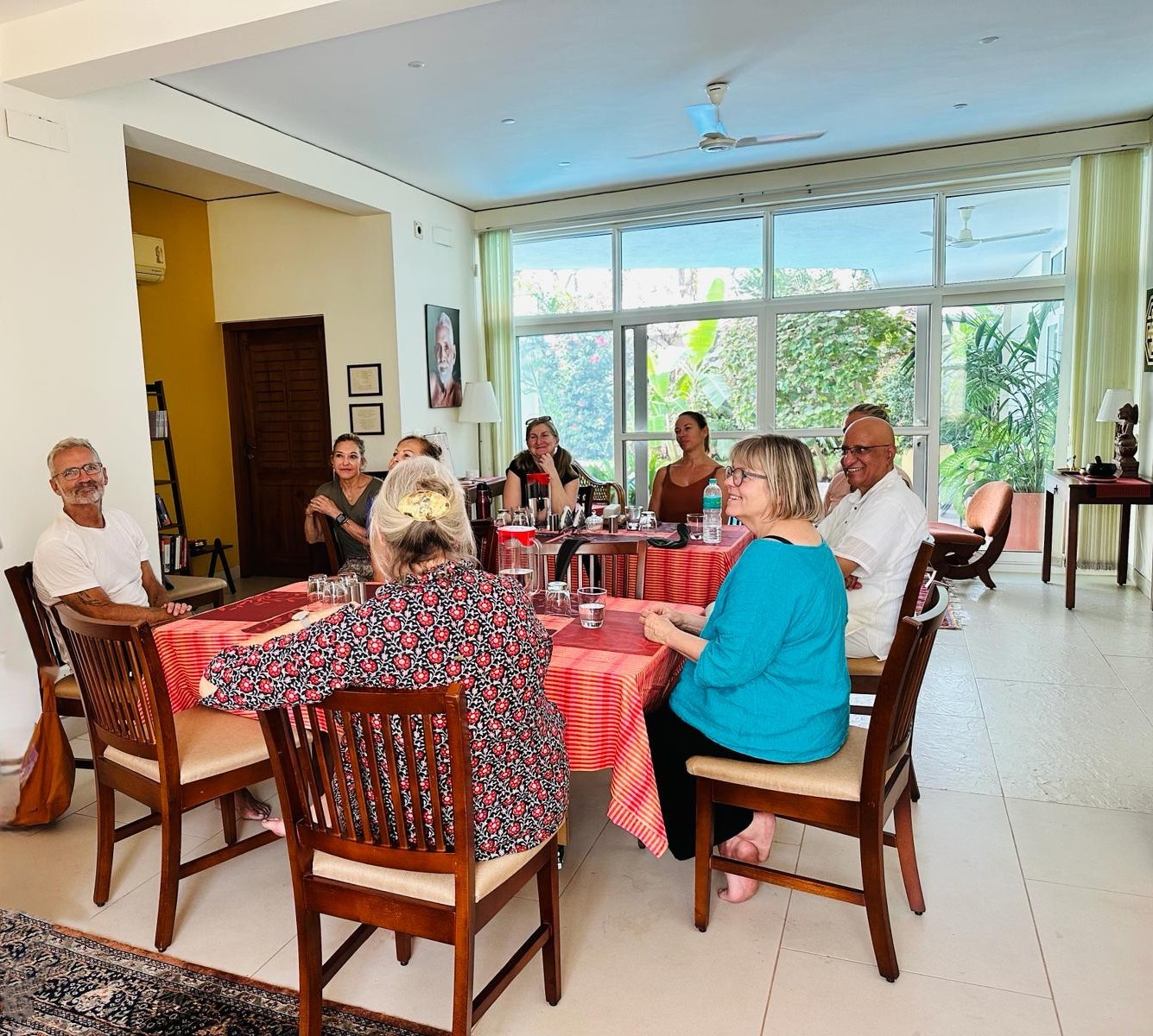
A cozy indoor space overlooking the swimming pool is perfect for smaller group meetings, intimate discussions, or quiet contemplation.
Our library stocks everything from ancient texts to modern mindfulness research. Grab a book, find a cozy corner, and lose track of time.
Outdoor Retreat Spaces
Guests are welcome to enjoy the peaceful veranda, rooftop nooks, and garden areas surrounding the pool—ideal for solitude, journaling, or simply being with nature.
Outdoor Areas & Natural Surroundings:

Sangam Retreat House is just a 10–15 minute walk from the sacred ashrams of Tiruvannamalai. The natural surroundings offer a gentle rhythm that supports both inward reflection and outward exploration.
🌿Local Exploration
External activities—such as temple visits, nature walks, or cultural outings—are shaped by the interests of each group and typically guided by the group leader’s suggestions. We’re always happy to provide helpful information and local insights whenever needed.
· Tipping – Tipping in India is more about your gut feeling and there are no rigid guidelines. Check to see if a service charge is already added to your bill. It’s safe to say that the average tip in India is around 10% and depends on the quality of service.
Always have small bills and change on hand to give to the beggars and Sadhus when you feel moved. There are many in Tiru, and it is not necessary to give to everyone. 10 Rupee bills are always happily accepted or more if you feel so inclined. If you give to one, you may have many surround you, so be discriminating.
🛎️ Guest Essentials & Onsite Support:
📶 Wi-Fi & Connectivity Information
We offer Wi-Fi access throughout the main building and common areas, providing a reliable connection for checking emails, staying in touch with loved ones, or handling light online tasks.
🔌 Power & Plug Compatibility
- Electrical sockets are compatible with UK, US, and Indian plugs
- Please note: The voltage is 220V
- 110V devices will require a voltage converter to operate safely
We recommend guests bring any necessary adapters or converters to ensure smooth connectivity during their stay.
♿ Accessibility Features
At Sangam Retreat House, we believe that everyone deserves access to retreat spaces and community. Our facilities are designed to support comfort and ease for guests of all abilities.
Accessible Entry & Movement
- Ramps have been installed at one of the three entrances to support wheelchair access. While the second floor isn’t reachable by wheelchair, small ramps have been added to ensure guests can enjoy rooftop access with ease.
- Elevator access is available to the second floor and rooftop terrace
- Paved, well-lit pathways connect all areas of the property for safe and easy navigation
Inclusive Meditation Spaces
- In addition to floor cushions, we provide comfortable chairs to ensure everyone can participate fully in group sessions
Supportive Materials
- All printed materials can be made available in large print formats upon request
If you have specific accessibility needs, please don’t hesitate to reach out. We’re committed to making your stay welcoming, respectful, and fully accommodating.
Daily Retreat Schedule & Group Flow:
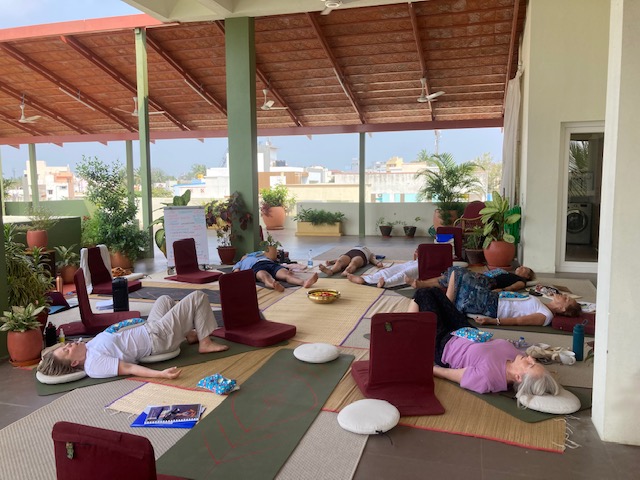
Sangam Retreat House honors the diverse and sacred nature of each retreat. There is no fixed daily schedule from our side, as every group brings its own rhythm, practices, and intentions.
Group-Led Structure
All practical details—such as session timings, activities, and communications—are organized and shared by the group leader.
- We do not communicate directly with individual participants prior to arrival
- Group leaders typically coordinate via pre-retreat Zoom calls, emails, and WhatsApp groups
- Once guests arrive, they follow the schedule curated by their group leader
Our Role: Holding Space & Support
We tailor our meals, housekeeping, and overall support to align with the unique flow of each group. Whether the retreat centers on meditation, yoga, healing, or other modalities, we adapt with care and reverence.
Each retreat is a distinct and sacred journey, and we’re here to quietly support that unfolding.
Practical Information for Your Stay:
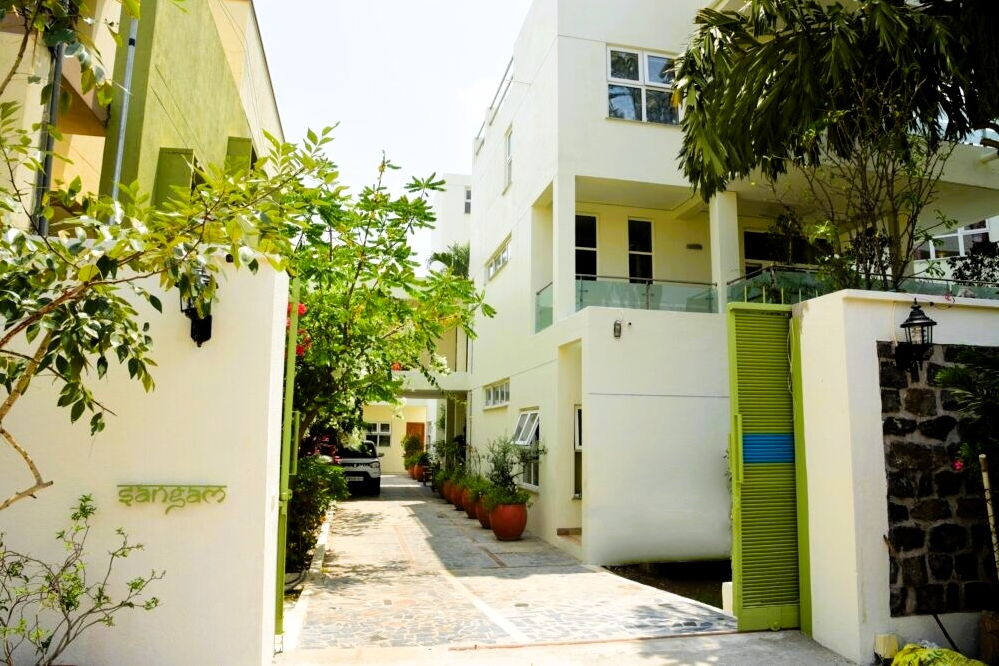
House Guidelines for a Peaceful Retreat
To ensure a serene and harmonious experience for all, Sangam Retreat House follows a few simple guidelines. These help maintain the sacred and communal atmosphere that guests value during their stay.
👣 Shoes-Free Living Spaces Please remove your footwear before entering the indoor areas. A dedicated shoe rack is available outside the main house entrance for your convenience.
🚪 Exclusive Retreat Environment Sangam House is a dedicated retreat space, not a guest house. All residents are participants of the same retreat, and we do not accommodate drop-in visitors or outside guests.
🚫 Substance-Free Sanctuary To preserve the purity and peacefulness of the space, Sangam Retreat House is proudly alcohol-free, smoking-free, and drug-free.
⚡ Backup Power Supply In the event of a power outage, we have substantial UPS battery backup installed to keep essential lighting and services running smoothly
🙏 Respecting the Spirit of Sangam House Sangam House is not suitable for tour groups, family gatherings, or wedding parties.
Final Thoughts: Welcoming the Journey Within
A stay at Sangam Retreat House is not just a pause from the outside world—it’s an invitation to gently turn inward. What began as a heartfelt welcome to close friends has blossomed into something far greater—a sacred space open to many.
Every detail, from the rhythm of daily practices to the atmosphere of the rooms, has been lovingly shaped to create a space where healing, reflection, and renewal feel natural.
Whether you arrive seeking spiritual clarity, emotional balance, or simply a quiet moment to breathe, Sangam House welcomes you with open arms and a grounded heart.
When you step into this space, you’re not just a guest—you become part of a shared intention for peace, growth, and connection. So come as you are, and let the silence, simplicity, and spirit of Sangam House guide you back to what truly matters.