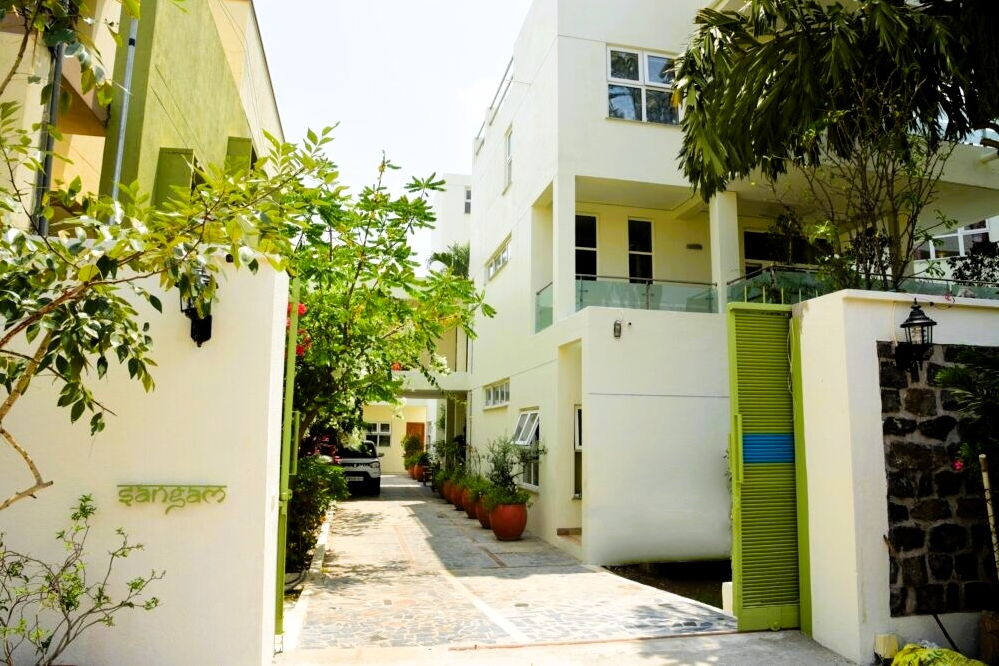
Sangam Retreat House

Categories
Blogs Sangam House Guide Tiruvannamalai

Places to Visit Near Sangam Retreat House to Enhance Your Spiritual Journey

Tiruvannamalai, one of Tamil Nadu’s most revered temple towns, radiates the ageless spirit of devotion. As you enter, a green signboard announces your arrival. The gentle presence of wandering monks in saffron robes, garlands of roses and marigolds perfuming the air, and an invisible current of sacredness felt everywhere—all come together to welcome you.

At the very center of Tiruvannamalai lies Arunachala Hill, a revered site of pilgrimage that can be seen from all parts of the town. Around its base stands the vast Annamalaiyar Temple, one of South India’s most important Shiva shrines, serving as a guiding light for countless devotees worldwide.

Set against the sacred backdrop of Arunachala Hill, Sangam Retreat House serves as an ideal base for those seeking to explore its profound spiritual energy. Just a short distance away are several must-visit ashrams, caves, and temples—each offering a unique experience to enrich your journey.

  • Sri Ramanashram (800 m)

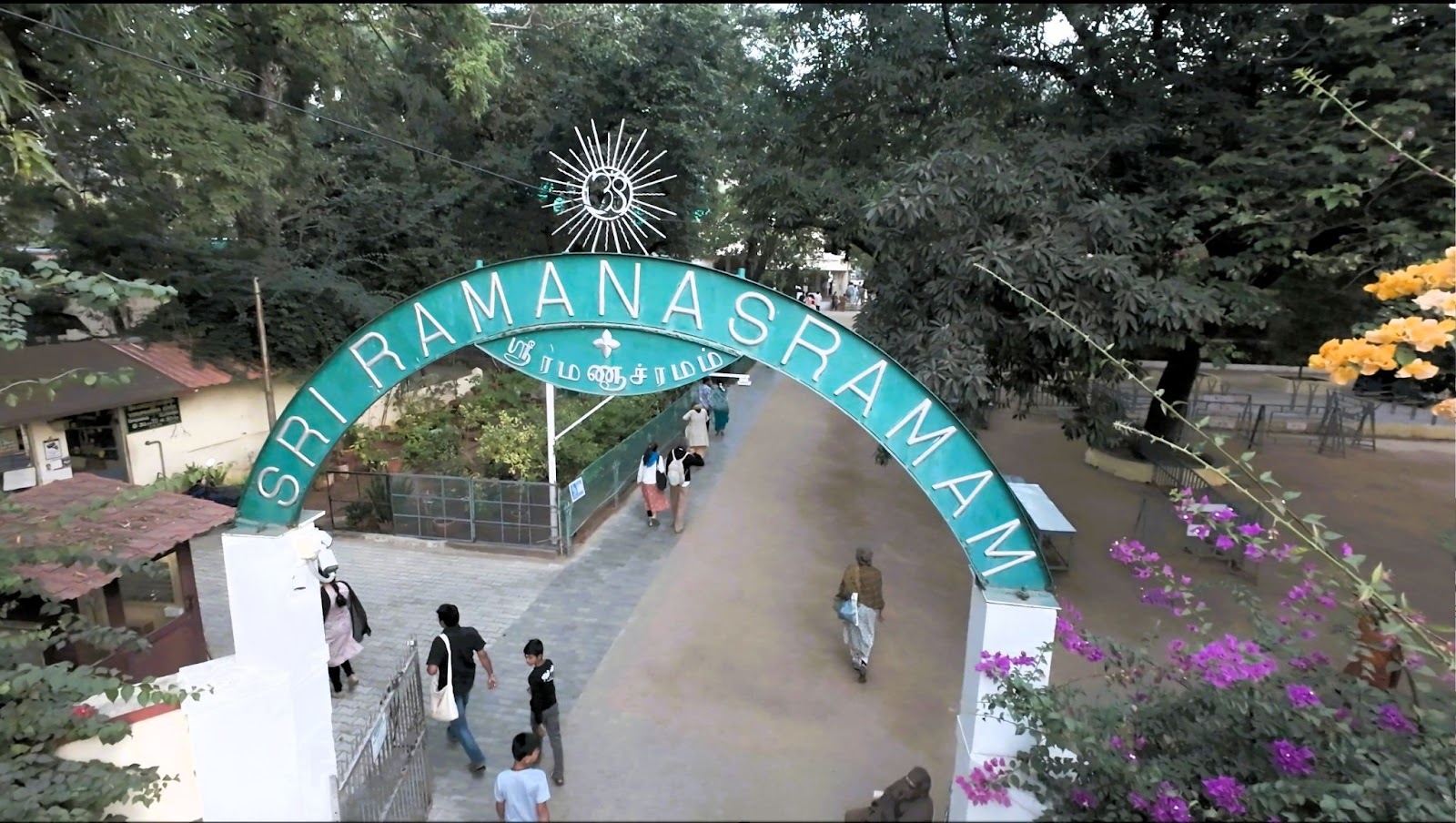
Just a short walk from Sangam Retreat House lies the renowned Sri Ramanashram, the ashram of Sri Ramana Maharshi , the sage of Arunachala. The atmosphere here is steeped in stillness, a silence that seems to echo the very presence of Maharshi himself. Established by Sri Bhagavan, this ashram has grown into a beacon of spiritual pilgrimage, welcoming seekers from around the world who come to immerse themselves in the path of self-inquiry and the timeless wisdom of Advaita. 

From the moment Ramana arrived in Tiruvannamalai, he never left. He spent fifty-four uninterrupted years at the foot of Arunachala, embodying the stillness and clarity of the Self. Sri Ramana Maharshi’s life and teachings consistently pointed seekers toward the source of lasting happiness—their own true Self. His approach to spiritual realization is considered one of the most lucid and direct expressions of Advaita Vedanta, the non-dualistic wisdom tradition of India.

He taught that our essential nature is the Supreme Self, ever-present and unchanging. To awaken to this truth, one must turn inward and trace the origin of the ego—the ‘I-thought’—and rest in the Self. This method, known as Self-Enquiry, was the cornerstone of his guidance.

Ramana emphasized living life in a natural and effortless way. He did not advocate for renunciation or engagement in worldly activity, but rather encouraged freedom from the illusion of personal doership. Everything unfolds according to destiny, he said; the key is to remain free from the belief that “I am the doer.”

Through Self-Enquiry, one is gradually released from the fear, confusion, and suffering that arise from identifying with the ego. As this illusion dissolves, the seeker begins to experience true freedom and profound peace. The path leads from the seeming separation between self and world to the blissful recognition of one’s real nature. Even brief glimpses of Self-awareness reveal a Reality far beyond the limitations of ego—this living current of Awareness is ultimately known as the Self, Pure Consciousness.

Today, Sri Ramana Maharshi Samadhi Shrine is the final resting place for this great sage and marks the spot where Ramana’s physical body was interred after his death on April 14, 1950. It stands at the heart of the ashram and serves as a sacred and potent space for meditation, devotion, and inner silence. 

  • Seshadri Swamigal Ashram (1 km)

Almost adjacent to Sri Ramanashram is the Seshadri Swamigal Ashram. Known for his intense devotion and mystical powers, Seshadri Swamigal is lovingly called the “Saint with a golden hand.” Devotees often experience blessings of protection and healing here. The ashram is vibrant with daily pujas, chanting, and the compassionate presence of the saint’s samadhi.

Arriving in Arunachala six years before Sri Ramana Maharshi, Seshadri Swamigal played a pivotal role in Ramana’s early life. It was he who discovered the young sage meditating in the Pathala Linga of the Arunachaleswara Temple (the main temple in Tiruvannamalai), shielding him from harm and quietly introducing him to the world. The two were contemporaries, each embodying a unique spiritual radiance.

Seshadri Swamigal was a ascetic yogi of exceptional depth, known for his siddhis and psychic abilities. Devotees who approached him with sincerity often experienced miraculous healings and transformative visions—both in dreams and waking states. His spiritual presence was said to fulfill heartfelt desires and awaken deep devotion.

Throughout his life, Seshadri Swamigal emphasized the supreme grace of Arunachala. He taught that the hill itself is the embodiment of Shiva, declaring, “This is Shiva Lingam. It is enough to worship this. One can become spiritually enlightened and attain liberation.” He also stressed the power of giripradakshina—the sacred circumambulation of the hill—urging devotees to perform it especially on Tuesdays, as it would invoke profound devotion and spiritual awakening.

Locals affectionately referred to Sri Seshadri Swamigal as Mother Parvathi, and Sri Ramana Maharshi as Skanda (Lord Subramanya), reflecting the divine bond they believed existed between the two saints. On one occasion, a devotee remarked to Sri Ramana that people often called Seshadri Swamigal a madman. With a gentle smile, Ramana replied, “There are three madmen in Arunachala—Seshadri, Arunachaleswarar, and myself.”

Sri Ramana once observed, “Sri Seshadri does not allow people to come near him. Here, all are coming,” highlighting the contrasting ways in which the two saints engaged with devotees.

On January 4, 1929, Sri Seshadri Swamigal attained Mahasamadhi, and his body was taken out in a grand procession attended by a vast crowd of mourners and devotees. In a rare and poignant gesture, Sri Ramana Maharshi descended from the slopes of Arunachala to join the funeral procession—a significant moment, as he seldom left the sacred hill.

Among the people of Arunachala, Seshadri Swamigal was lovingly called “Anna” (elder brother), while Sri Ramana was referred to as “Thambi” (younger brother), reflecting the familial affection and spiritual kinship they shared. Sri Ramana personally oversaw the construction of Sri Seshadri Swamigal’s Samadhi shrine, ensuring it was built with care and devotion.

Later, in a gesture that further affirmed their spiritual unity, Sri Ramana chose to reside near the Ashram of Sri Seshadri Swamigal, embodying the sentiment held by the local devotees—that they were none other than Muruga and Kamakshi, divine son and mother, manifest in human form.

Today, his samadhi is enshrined within the serene grounds of Sri Seshadri Ashram. Though he has left his physical form, his presence continues to guide, bless, and uplift those who seek his grace. His own journey led him to Arunachala, and it is to this sacred hill that he directs all seekers—to realize life’s highest purpose and attain eternal bliss.

  • Skanda Ashram & Virupaksha Cave (2.3 km via Skandashram Trail)

Climbing partway up Arunachala Hill leads to two extraordinary spots: Skanda Ashram and Virupaksha Cave. Ramana Maharshi lived in Virupaksha Cave for nearly 17 years in deep silence. It was during his time in this cave that foundational works such as Who am I? and Self-Inquiry emerged. For this reason, many devotees consider it a sacred site that must be visited. The atmosphere within the cave continues to offer a deeply meditative experience, often described as profoundly transformative by those who sit in its stillness.

Skanda Ashram, slightly higher up the hill, also housed Ramana and his early disciples. Ramana lived at Skandashram from 1915 to 1922. It was here that his mother, Alagammal, came to live with him and began cooking meals on-site for the growing community, replacing the earlier practice of carrying prepared food up to the cave, as had been done since the earliest years. With the establishment of Skandashram, the transition to the larger cave marked the true beginning of what would become the Ramana Ashram. At that time, a small circle of devotees gathered around Sri Ramana Maharshi, sustaining themselves on food offered by visitors and those devoted to him. As the number of followers steadily increased, the practical need to prepare meals regularly for both residents and guests became apparent, prompting a search for more water and space to build a kitchen. 

To meet these growing needs, the devotees constructed a modest structure around the Skandashram cave. This included a separate room for Ramana’s mother, ensuring her comfort and care. The space was not only designed to support the human community but also extended its hospitality to the animals who lived alongside Ramana and the early ashramites, sharing in the food and companionship of the ashram life.

Both places radiate a stillness that makes meditation natural and effortless. The short trek uphill rewards seekers not only with sacred energy but also with breathtaking views of the temple town below.

  • Yogi Ramsurat Kumar Ashram ( 700 m)

Known as the “Beggar Saint of Tiruvannamalai,” Yogi Ramsurat Kumar lived a life of utter surrender, radiating divine madness and grace. His ashram today is a vast prayerful space where his presence can still be deeply felt. Devotees chant, sing bhajans, and sit in silence, remembering the saint whose every breath was dedicated to the Divine.

Yogi Ramsuratkumar’s divine utterances, though infrequent, flowed spontaneously and carried profound depth. His very being was his teaching—an immense spiritual presence in Tiruvannamalai, radiating the grace and essence of the Divine. His core message was unwavering: “Everything is my Father. I am nothing, nobody is anything, nothing is anything—there is only Him.” He often reminded devotees, “Don’t pay attention to this beggar,” while also affirming, “Whatever this beggar does has implications all over the universe.”

Miracles frequently unfolded around him, earning him the affectionate title “the God-child of Tiruvannamalai.” People from across India would come seeking his blessings for various life concerns—whether yearning for children, hoping for success in business, or seeking relief from suffering. His response was simple yet powerful: “Ram! Ram!” And their prayers were often fulfilled. Yogiji never made a spectacle of these events; his grace was quiet, natural, and profound.

In time, a large ashram dedicated to Yogi Ramsuratkumar was built, honoring his legacy and continuing to serve as a sanctuary for seekers drawn to his presence and teachings.

  • Adi Annamalai Temple ( 6.4 km)

Situated at the foothill on the Giri Valam path (the sacred 14 km walk circumambulating the road around Arunachala), the Adi Annamalai Temple is an ancient shrine older than the grand temple in town. Pilgrims stop here during their Giri Valam to bow down before the Lord in his primal form. 

Adi Annamalai Temple is regarded as the oldest temple in the region surrounding Tiruvannamalai. Historical accounts suggest it was constructed at least a hundred years before work began on the Arunachaleswara Temple, making it nearly 2,000 years old. The name “Adi Annamalai” translates to “original” or “ancient” Annamalai, referring to Arunachaleswarar.

Though modest in scale—covering just about an acre—it holds immense spiritual significance, especially when compared to the expansive 25-acre Arunachaleswara Temple located on the southeastern side of Arunachala Hill. The view of the sacred hill from Adi Annamalai is revered as Siva Yoga Muka Darshan, a divine aspect witnessed by the great Siddha Thirumoolar.

Bhagavan Sri Ramana Maharshi would often stay at this temple for two to three nights during his Giri Valam. He once shared that while at Adi Annamalai, he heard the celestial chanting of the Sama Veda, further deepening the temple’s mystical aura and spiritual legacy. The temple is simple yet powerful, carrying the weight of centuries of devotion.

  • Annamalaiyar Main Temple ( 2.5 km)

The Arunachaleswarar Temple, the main temple in Tiruvannamalai holds a revered place in Tamil Shaivite tradition, having been celebrated in the Tevaram hymns—devotional verses composed by the three great Saivite saints between the 7th and 9th centuries CE. Saints Thirugnana Sambandar, Appar (Thirunavukkarasar), and Manickavasagar sang in praise of Lord Shiva here, while Arunagirinathar offered his devotional Thiruppugazh verses at this sacred site.

This temple is one of the Pancha Bhootha Sthalams, representing the element of fire (Agni Lingam). According to legend, Lord Shiva manifested as an infinite column of fire at this location, a form that neither Brahma nor Vishnu could trace to its origin or end. Eventually, Shiva took the form of a Sivalingam at the base of Arunachala Hill, where the Annamalaiyar Temple now stands. It is believed that even the remembrance of Lord Arunachaleswarar can grant Mukti (liberation).

The temple’s presiding deity is Arunachaleshwara, also known as Annamalaiyar, with Goddess Parvathi worshipped as Unnamalai Amman. The temple is renowned for its majestic architecture, deep-rooted spiritual traditions and vibrant festivals. Its greatness is reflected in its frequent mention in classical Tamil literature, including the Tevaram and Thiruvasagam.

Recognized as a Paadal Petra Sthalam (refers to a group of sacred Shiva temples in Tamil Nadu and parts of South India that have been glorified in the Tevaram hymns), the temple is one of the 275 sacred Shiva temples glorified by the Nayanmars, the Tamil saint-poets.

Spread across an impressive 25-acre complex, the temple features a towering Rajagopuram that rises 217 feet with 11 stories. This monumental gateway was initiated by King Krishna Devaraya of the Vijayanagar Empire and later completed by Sevappa Nayaka of Thanjavur. The temple includes nine gopurams (towers), nine prakarams (sacred enclosures), and is surrounded by four massive stone walls, giving it the appearance of a fortress. Inside, the temple houses 56 courtyards, two sacred tanks, and a thousand-pillared hall, showcasing the grandeur of Dravidian architecture. One of its most spiritually significant spots is the Pathala Lingam, an underground shrine where Bhagavan Sri Ramana Maharshi is believed to have performed intense penance.

Every full moon night, thousands of pilgrims walk the Giri Valam, circling the temple and Arunachala Hill with devotion. Visiting this temple is essential for anyone seeking to feel the pulse of Tiruvannamalai.

  • Ashta Lingams on Girivalam Road (Situated at intervals around the hill)

Along the Giri Valam route lie the sacred Ashta Lingams — eight shrines each representing a direction and associated with a planet. Pilgrims pause at these shrines during their circumambulation of Arunachala, offering prayers for balance, protection, and blessings. Stopping at each lingam connects the journey to the cosmic rhythm that Tiruvannamalai embodies. Read More

  • Sri Saibaba Dhyana Mandiram (6.9 km)

For devotees of Sri Sai Baba of Shirdi, the Saibaba Dhyana Mandiram on the sacred Girivalam path in Tiruvannamalai offers a haven of peace, devotion, and divine presence. The soft sounds of Baba’s namam provide a backdrop to the simple atmosphere in the temple that allows so many
pilgrims to sit in the presence and feel the compassionate gaze of Sai Baba guiding their spiritual journey around Arunachala Hill.


This Mandir is the realization of a vision held by Sri Sainathuni Sarath Babuji, who, as a young man, envisioned a beautiful Sai temple along the Giripradakshina route. The temple was inaugurated on March 19, 2014, and its design was shaped following Sri Babuji’s guidance. The positioning and elevation of the statue were deliberately chosen so that Sai Baba would be visible to those walking the Girivalam, offering darshan from afar. The steps that gently lead devotees up into the open entrance of the hall are nine in number as this held a particular significance in Baba’s life and the use of red and white stone make a playful reference to painted stripes on
traditional South India temples.


The temple’s open-air design allows devotees to circumambulate the statue freely, with no pillars obstructing the view, creating a seamless and immersive experience. The statue itself was carved by Rajiv Talim using the original plaster model made by his grandfather, the celebrated Bombay sculptor Balaji Vasantrao Talim in pure white marble from the same quarries in Carrara, Italy. The work was done in Talim’s studio in Mumbai and it was Sri Babuji’s wish that it be as close as possible to the original. After the statue was carved, it was transported to the Sai Baba Mandir in Shirdi where the 1st puja and arati was performed by the temple priests and then to Sri Babuji’s samadhi where Pujya Ammagaru offered the 2nd arati. Only then did it undertake the long journey to Tiruvannamalai. Behind the statue screen stands the Akhanda deepam, the perpetual flame that was originally lit by Sri Babuji himself in Shirdi and it has been kept alight there ever since. That flame was then carefully carried to Tiruvannamalai and has since burned uninterruptedly under its glass dome.

The temple’s construction was a labor of love, made possible through the devotion of countless followers who joined in the physical work as a way to express the depth of their love for both Sri Sri Baba and Sri Babuji. Although Sri Babuji passed away in 2010 and did not witness the completion of the Mandir, his presence is deeply felt throughout. Behind the Mandir lies Haritachala, a serene expanse of land that serves as both an organic farm and a retreat center for members of Sri Babuji’s sangha. A few times a year, silent retreats are held here, led by Sruti, Sri Babuji’s daughter, who continues to uphold and share his teachings with deep dedication. Haritachala and the temple are solar-powered, reflecting a thoughtful integration of sustainability and spirituality that was close to Sri Babuji’s heart.

Each day, the statue is ritually bathed, with four pujas and offerings performed, culminating in an Arati at 8pm, mirroring the devotional rhythm of Shirdi. The statue is carved with Baba wearing his customary kafni and head cloth but uniquely here, unlike other depictions of him, shawls and scarves are rarely used to adorn him – an elegant and distinctive feature of this temple. On Full Moon nights, the temple remains open for 24 hours, welcoming pilgrims into its tranquil embrace under the moonlit sky, offering uninterrupted darshan and deep spiritual connection.

A Journey Within and Without

Walking out of Sangam Retreat House, you step directly into a living mandala of sacred sites. From the profound silence of Sri Ramanashram to the timeless majesty of the Annamalaiyar Temple, from the caves where Ramana sat in stillness to the humble ashrams of saints, every place holds a unique fragrance of truth.

A spiritual journey here is not about sightseeing — it is about being seen by Arunachala, being stripped of illusions and returning to the simple recognition: the Self alone is Real.

Categories
Blogs Sangam House Guide

What to Expect at Sangam Retreat House: A Guest’s Guide

Sangam Retreat House – where there is a rhythm that slows the pulse of time; where your arrival feels less like checking in and more like coming home to yourself. You’ve booked your stay, packed your bags, and set your intention—but there’s still that flutter of uncertainty: What really happens when I get there? This guide walks you through the experience—from the moment you drive to our sanctuary to the details that inspire guests to return year after year.

You may arrive with questions or simply with the need to pause. And as you step into our sanctuary, something shifts. The mountain watches in silence. The air carries stories. And the space—spacious, serene, sacred—begins to hold you. Our returning guests often call it their “reset button.” And yes, many get emotional when they speak of the mountain view that can move people to tears. 

This guide is an attempt to provide guests with everything they need in terms of logistics and planning ahead for Retreat in Tiruvannamalai, South India. So what unfolds during those transformative days? Let’s take you inside.

Before You Arrive Essential Preparations:

Booking and Reservation 

Reserving your space at Sangam Retreat House is simple —just visit www.sangamhouse.com and fill out our contact form. Once submitted, a member of our team will reach out shortly to assist you with the next steps. We recommend booking early to ensure a smooth experience — Sangam House tends to fill quickly during the winter season. 

Making Travel Arrangements

·       You need a passport that is currently valid for at least 6 months.

·       You must obtain a travel visa to India (tourist visa) by completing an on-line application. Go to evisa and follow instructions for tourist visa.

What to Pack for Your Retreat

Packing for Retreat isn’t quite like prepping for a typical vacation. Comfort, modesty, and mindfulness are your guiding principles.  Here’s what to bring:

Weather and Clothing

·       In South India during your trip it will be comfortable weather, with rain unlikely but possible. The average maximum temperatures are 300 C / 860 F during the day in December / January; minimum average temps are 200 C / 680 F.

·       In the sun, the days will be warm, so plan to have clothes that will allow you to be appropriately covered but not hot. At night it may be cool, so you may need some kind of sweater/vest/shawl and sleepwear that is warm. It is suggested to wear loose, layered, comfortable clothing, covering the legs, and if sleeveless, a scarf or shawl. Light, breathable attire is suggested for daily asana practice and yoga. 

Respectful temple wear – In Tiruvannamalai’s sacred spaces, modesty matters. Clothing should cover the chest, shoulders, and legs. For women, sleeves are encouraged, and trek-friendly outfits should still honor local customs.

Shoes for specific activities: Sturdy walking shoes or trainers are ideal for nature walks, travel days, and exploring the hillside. Flip-flops or sandals work well for indoor communal spaces and moments of ease.

  • Crocs are good because they are waterproof, easy to wash, and can slip on and off easily
  • Also consider that your footwear should not be too valuable, as shoes may be left outside in shared areas.

Money 

Traveler’s checks will not be much use in India, and credit cards will not be as uniformly accepted as you are used to in the US or even many other countries. Upon leaving for India, ensure that you have sufficient available cash to withdraw and/or bring with you. There will be ATM cash machines at the airport when you arrive to get cash in Indian rupees. One can also choose to bring other currencies and change to rupees in Tiruvannamalai or get rupees from ATM machines here. Please be advised that there is only one ATM machine near Ramana Ashram, there is often a long line, and sometimes they are out of cash. It is suggested to bring credit and debit cards and some cash, so you have several options.

It is also VERY important to let your bank know the period of your stay in India so that they do not suspect fraudulent activity and stop your ATM/credit card, and therefore your access to money.

Cell phone 

It is fairly easy and inexpensive to get 1 month of international roaming just for texting. You can also bring an unlocked cell phone which takes a sim card, and for a small amount get a local sim card on the first day, with enough “pay as you go” credit to last the trip.

On your arrival at Sangam House, an emergency number will be provided so that anyone in the group can be contacted if necessary in an emergency. Feel free to give this number to your loved ones and work colleagues for emergency calls only. This number will only work during the days of Retreat.

Other Items

  • Mosquito repellent that is natural and non-toxic / non-scented. (Vibhuti (sacred ash) works well. It is the sunscreen of the yogis!) 
  • Several passport size photos of yourself, several photocopies of the picture page of your passport, and your visa / evisa for India.
  • A torch/flashlight with the widest beam is important for navigating at night.
    • Batteries that last long and are light (e.g. lithium).
  • Sun protection – Sunscreen will be needed, perhaps natural and non-toxic as for baby skin. The suggestion to avoid toxic products is not only for yourself but for the benefit of all traveling together, especially those with sensitivities and allergies.
    • Hat and/or sunglasses for sun protection, especially when walking on the mountain.
  • Reusable water bottle – A water bottle is essential. Even though you will be provided with high quality water in the Retreat House, you need to carry your own bottle to ensure you have enough water at all times, especially on the mountain. 
  • Neti pots are highly recommended to remove pollutants, using packets of Himalayan salt for nasal cleansing solution. 
  • A money belt that is light and goes around the waist is suggested so that important documents and money are easily accessible and secure.
  • Journal and pen – For internal reflection and writing during retreat.
  • Daypack or small backpack that can be taken on walks, especially on the mountain. Note that you will not want to bring a purse that cannot be carried across the chest. Purses are easy to grab off one’s shoulders when walking and distracted.
  • Protein bars are essential to sustain yourself during long days. Bring plenty for the whole trip (and some variety) because they are not easily available in India.
  • Charcoal tablets (very helpful to have on hand for any cases of stomach disturbance)
  • Large and small ziplock bags are very useful to keep things clean and dry.
  • An inexpensive watch or small travel clock is helpful to be able to honor the commitment to be on time while not using cell phones in the Retreat space.
  • Electrical adapters are needed for India. Voltage is 220 in India, so 110 voltage devices cannot be used.
    • All electrical plug sockets at the Retreat house are of a newer type and will accept IN, US and UK plugs. 
  • Swimwear – For relaxing dips in our in-house pool.

Optional Items

·       A light waterproof jacket or poncho in case of rain.

·       Meditation cushion – Extra cushioning or padding if needed/desired to support the back and/or seat, especially for sitting on the mountain

·       Vitamins / supplements, tampons and any medications you normally take at home

·       Ear Plugs – We recommend bringing your preferred earplugs —There may be a chorus of stray dogs barking at night! 

What not to bring

Please pack as lightly as possible. At certain moments, you may have to carry your luggage for a short distance, so you will be very happy to bring the least amount possible and not be weighed down by a heavy bag. It is better to pack light than to have too much to carry.

·       Bring as little jewelry as possible and nothing expensive, most notably, for example, your valuable watch.

·       Avoid too many clothes, especially heavy cotton and denims that won’t dry quickly and will be too warm. 

·       Do not bring too many books. Even though you might imagine reading extensively, heavy books will weigh you down considerably. Books are also extremely cheap in India. And you will find things in India that you might not find elsewhere.

·       Please do NOT bring or wear perfume or scented lotions. This is very important out of respect to others. You will be in close proximity with others in the group and also sharing rooms. One may wish to find some unscented natural deodorants that are not only non-toxic to others, but also good for one’s own health

·       No need to bring yoga mats and hairdryers (bulky and are provided at the Retreat house.)  

You will receive an information sheet on arrival at the Retreat house with addresses and contact information for all the relevant places in Tiruvannamalai.

Transportation Options to Sangam Retreat House:

Group leaders who are familiar with Tiruvannamalai often prefer to use their own trusted contacts for services such as transport, auto rickshaws, massages, tour guides, restaurants, and currency exchange. For those new to the area, we’re happy to offer guidance and connect them with dependable local services. (Information sheet available at Sangam House)

Arrival Patterns Some groups arrive together on the same flight and travel by bus to the retreat. However, most guests arrive individually from various directions—Bangalore, Chennai, or Trichy—via private cars at different times. Others may already be in Tiruvannamalai and arrive by auto.

Welcoming Guests It’s rare for all guests to arrive at once; arrivals typically occur throughout the day. To ensure a warm welcome, we coordinate closely with the group leader, who provides us with an arrival schedule. Room allocations are usually handled in advance by the group leader, though some prefer to finalize them upon arrival.

Registration Process As part of the check-in process, we complete the official arrival registration (C-form). For this, we kindly request guests to share their passport and visa details.

Health & Dietary Comforts at Sangam Retreat House:

At Sangam Retreat House, we strive to create a nurturing and homelike environment. Your group will have exclusive use of the house, allowing for a sense of togetherness and privacy that feels more like living in a shared home than staying in a hotel or resort.

Housekeeping & Laundry Our dedicated staff take care of all meal service, cleaning, and dishes. We also offer complimentary laundry service (excluding ironing). Housekeeping is thoughtfully scheduled during group sessions or outings to ensure minimal disruption and maximum privacy.

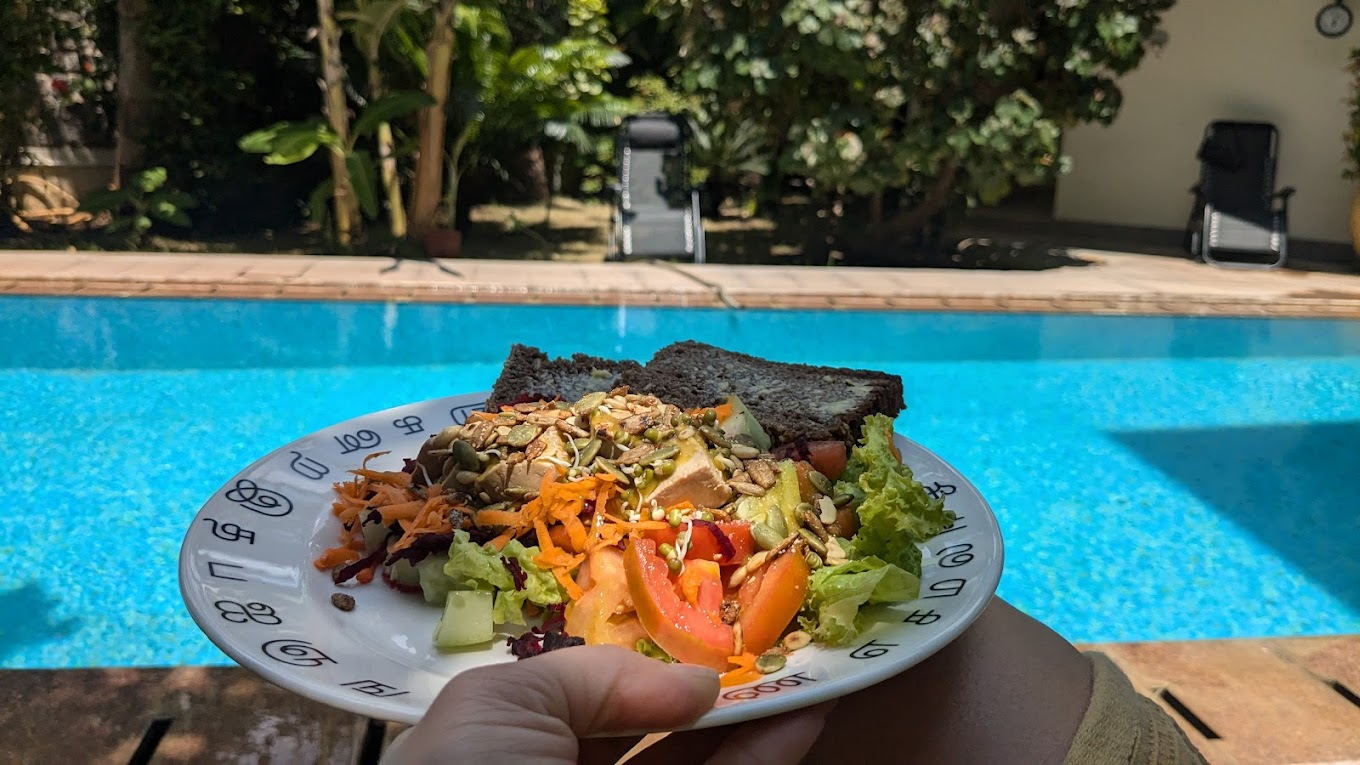
Meals & Dietary Preferences Meals are prepared based on the preferences and arrangements made in advance by the group leader. We collaborate with trusted small restaurants and local home cooks to provide mild, hygienic, and nourishing food—both Indian and Western options are available.

Refreshments & Drinking Water

  • Coffee and tea stations are available 24/7 on both the ground and second floors.
  • All water in the house is filtered and safe for drinking.
  • Refrigerators for group use are located on the ground floor, second floor, and a small one on the roof terrace.
  • Plates and cutlery are available on the ground and second floors for guests who wish to enjoy their own snacks.

Accommodations and Facilities:

Room Types and Amenities

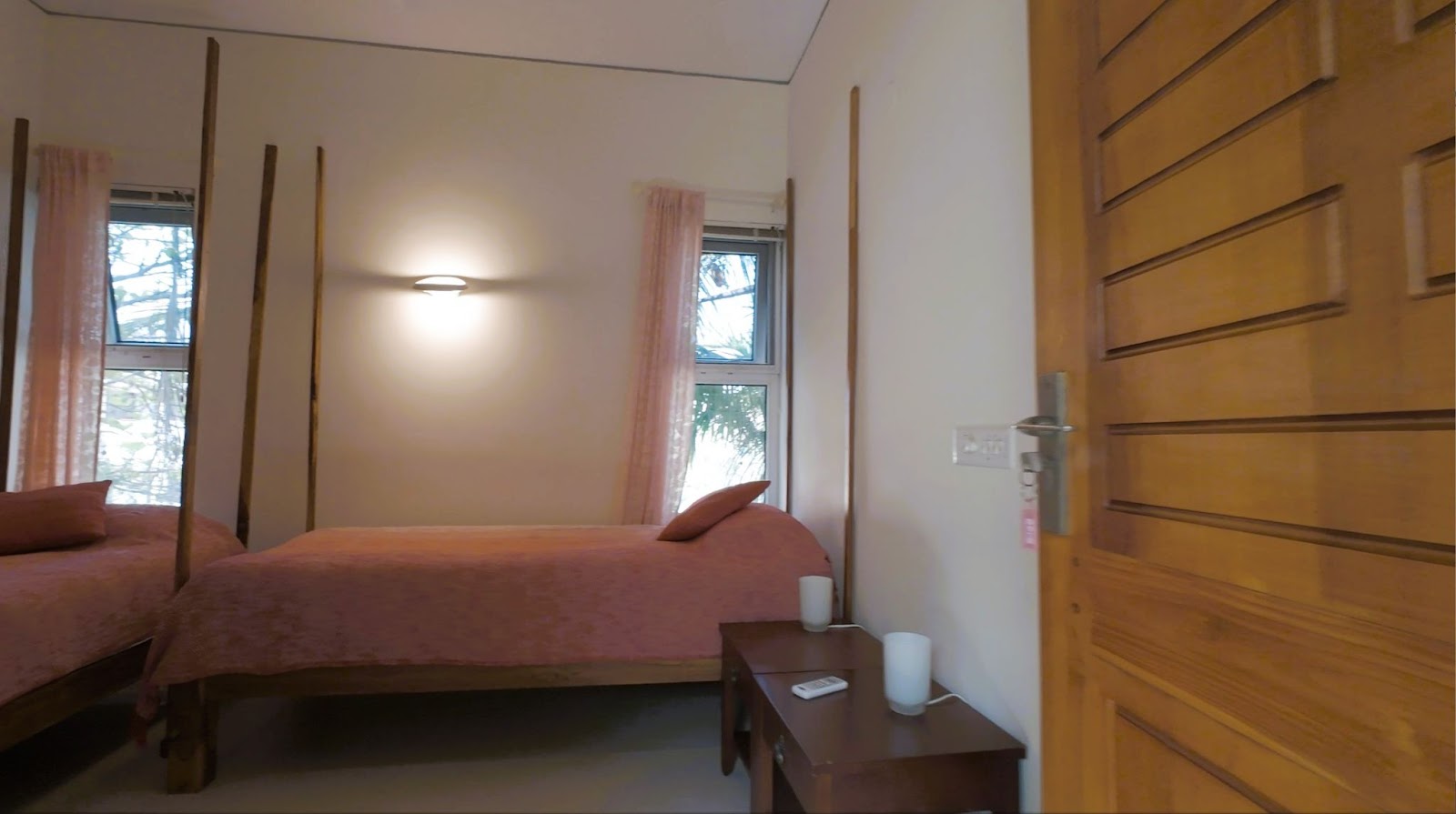
At Sangam Retreat House, our accommodations are  crafted to offer a blend of ease, tranquility, and thoughtful design. Each room invites guests into a peaceful space where simplicity and accessibility harmonize to support restful living. Though the rooms vary in size, the contribution requested from guests remains uniform across all options

Ground Floor Bedrooms

The ground level includes three well-appointed bedrooms,, each offering easy proximity to the swimming pool, dining space, and a welcoming indoor area ideal for small group gatherings.

Second Floor Bedrooms

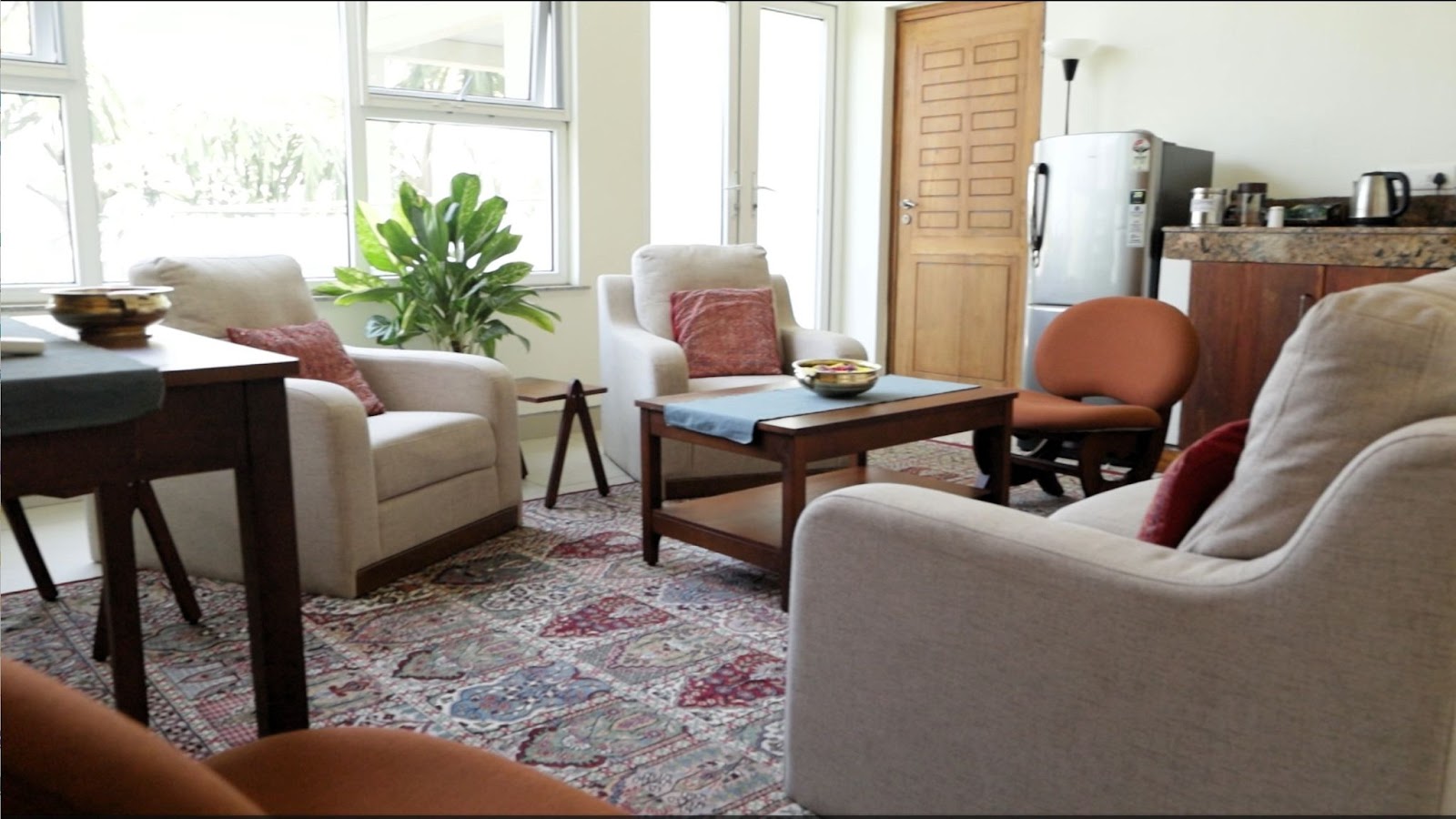
The second floor is home to seven peaceful bedrooms, complemented by a spacious living room and an outdoor sitting that looks out toward the majestic Arunachala mountain—an inspiring setting for moments of stillness and contemplation.

Flexible Bed Arrangements

  • All rooms are furnished with twin-sized beds, which can be joined to form doubles for couples.
  • Kindly note that some rooms feature fixed layouts and may not support bed adjustments.
  • Occupancy options include single, double, or triple, depending on group needs.

House Layout

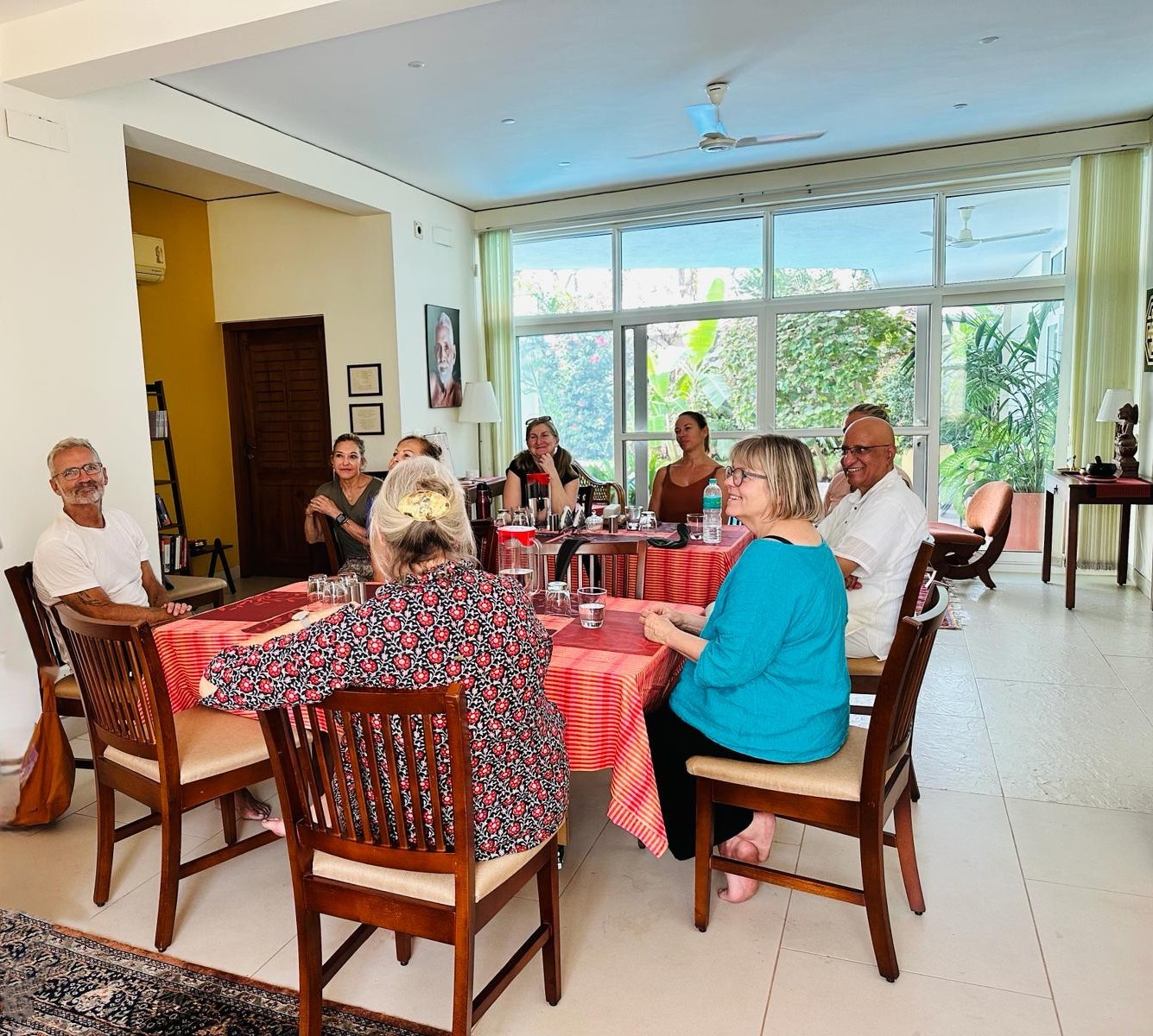
  • Ground Floor: Swimming pool, dining room (also used for small group meetings), and 3 guest bedrooms
  • Second Floor: Residential guest floor with 7 bedrooms, living room, and outdoor patio
  • First Floor: Private residence of the house owner; not accessible to guests

Amenities

  • Wi-Fi is available throughout the house
  • Each room includes air conditioning, ceiling fans, and optional mosquito nets (all windows are screened)
  • Bathrooms are equipped with showers only
  • Complimentary toiletries: hot water, hair dryers, shampoo, hand wash, and body wash
  • Fresh towels are provided for all guests

Shared Meditative Spaces & Gathering Areas:

Sangam Retreat House offers a variety of serene and spacious areas designed to support your group’s spiritual practices, workshops, and quiet reflection. All shared spaces are included in your stay and equipped to meet the needs of each gathering.

Third Floor Roof Terrace

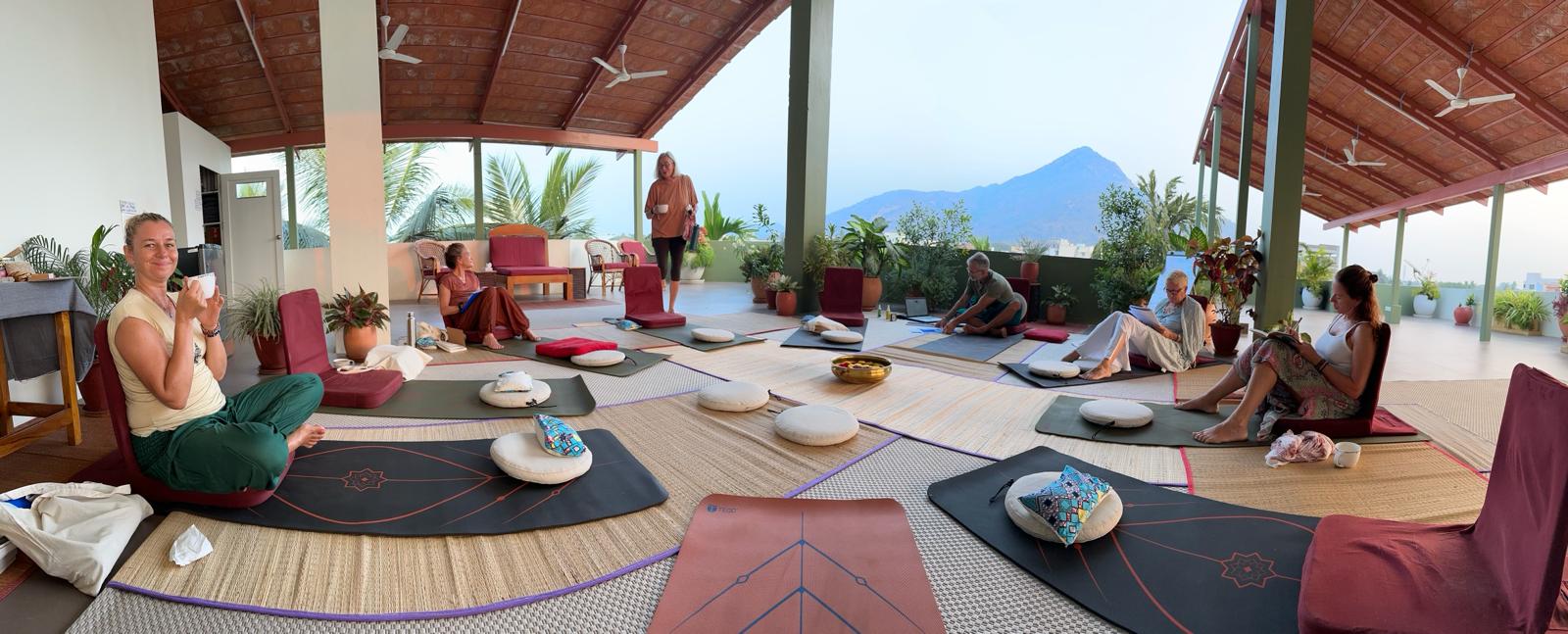
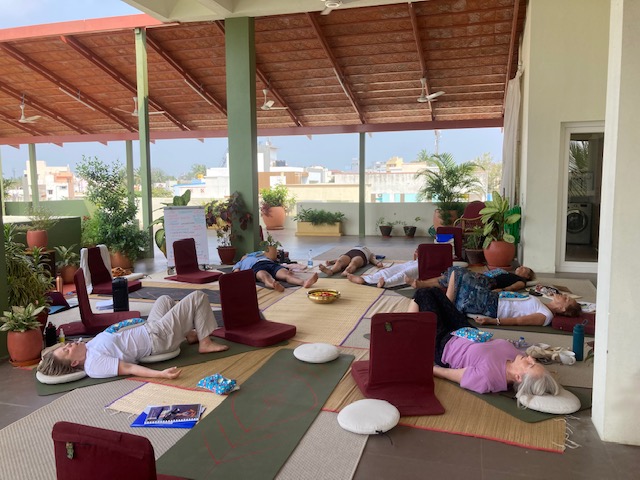
Our expansive rooftop terrace is the heart of many group activities—ideal for satsangs, yoga sessions, and workshops.

  • The tiled open-air space can comfortably host over 100 participants
  • Offers a breathtaking panoramic view of Arunachala, enhancing every moment of practice
  • We provide chairs, yoga mats, cushions, pillows, and blankets so each group can set up their space with ease

Ground Floor Gathering Area

A cozy indoor space overlooking the swimming pool is perfect for smaller group meetings, intimate discussions, or quiet contemplation.

Our library stocks everything from ancient texts to modern mindfulness research. Grab a book, find a cozy corner, and lose track of time.

Outdoor Retreat Spaces

Guests are welcome to enjoy the peaceful veranda, rooftop nooks, and garden areas surrounding the pool—ideal for solitude, journaling, or simply being with nature.

Outdoor Areas & Natural Surroundings:

Sangam Retreat House is just a 10–15 minute walk from the sacred ashrams of Tiruvannamalai. The natural surroundings offer a gentle rhythm that supports both inward reflection and outward exploration.

🌿Local Exploration 

External activities—such as temple visits, nature walks, or cultural outings—are shaped by the interests of each group and typically guided by the group leader’s suggestions. We’re always happy to provide helpful information and local insights whenever needed.

·       Tipping – Tipping in India is more about your gut feeling and there are no rigid guidelines. Check to see if a service charge is already added to your bill. It’s safe to say that the average tip in India is around 10% and depends on the quality of service.

Always have small bills and change on hand to give to the beggars and Sadhus when you feel moved.   There are many in Tiru, and it is not necessary to give to everyone.  10 Rupee bills are always happily accepted or more if you feel so inclined.  If you give to one, you may have many surround you, so be discriminating. 

🛎️ Guest Essentials & Onsite Support:

📶 Wi-Fi & Connectivity Information

We offer Wi-Fi access throughout the main building and common areas, providing a reliable connection for checking emails, staying in touch with loved ones, or handling light online tasks.

🔌 Power & Plug Compatibility

  • Electrical sockets are compatible with UK, US, and Indian plugs
  • Please note: The voltage is 220V
  • 110V devices will require a voltage converter to operate safely

We recommend guests bring any necessary adapters or converters to ensure smooth connectivity during their stay.

♿ Accessibility Features

At Sangam Retreat House, we believe that everyone deserves access to retreat spaces and community. Our facilities are designed to support comfort and ease for guests of all abilities.

Accessible Entry & Movement

  • Ramps have been installed at one of the three entrances to support wheelchair access. While the second floor isn’t reachable by wheelchair, small ramps have been added to ensure guests can enjoy rooftop access with ease.
  • Elevator access is available to the second floor and rooftop terrace
  • Paved, well-lit pathways connect all areas of the property for safe and easy navigation

Inclusive Meditation Spaces

  • In addition to floor cushions, we provide comfortable chairs to ensure everyone can participate fully in group sessions

Supportive Materials

  • All printed materials can be made available in large print formats upon request

If you have specific accessibility needs, please don’t hesitate to reach out. We’re committed to making your stay welcoming, respectful, and fully accommodating.

Daily Retreat Schedule & Group Flow:

Sangam Retreat House honors the diverse and sacred nature of each retreat. There is no fixed daily schedule from our side, as every group brings its own rhythm, practices, and intentions.

Group-Led Structure 

All practical details—such as session timings, activities, and communications—are organized and shared by the group leader.

  • We do not communicate directly with individual participants prior to arrival
  • Group leaders typically coordinate via pre-retreat Zoom calls, emails, and WhatsApp groups
  • Once guests arrive, they follow the schedule curated by their group leader

Our Role: Holding Space & Support

We tailor our meals, housekeeping, and overall support to align with the unique flow of each group. Whether the retreat centers on meditation, yoga, healing, or other modalities, we adapt with care and reverence.

Each retreat is a distinct and sacred journey, and we’re here to quietly support that unfolding.

Practical Information for Your Stay:

House Guidelines for a Peaceful Retreat

To ensure a serene and harmonious experience for all, Sangam Retreat House follows a few simple guidelines. These help maintain the sacred and communal atmosphere that guests value during their stay.

👣 Shoes-Free Living Spaces Please remove your footwear before entering the indoor areas. A dedicated shoe rack is available outside the main house entrance for your convenience.

🚪 Exclusive Retreat Environment Sangam House is a dedicated retreat space, not a guest house. All residents are participants of the same retreat, and we do not accommodate drop-in visitors or outside guests.

🚫 Substance-Free Sanctuary To preserve the purity and peacefulness of the space, Sangam Retreat House is proudly alcohol-free, smoking-free, and drug-free.

⚡ Backup Power Supply In the event of a power outage, we have substantial UPS battery backup installed to keep essential lighting and services running smoothly

🙏 Respecting the Spirit of Sangam House Sangam House is not suitable for tour groups, family gatherings, or wedding parties.

Final Thoughts: Welcoming the Journey Within

A stay at Sangam Retreat House is not just a pause from the outside world—it’s an invitation to gently turn inward. What began as a heartfelt welcome to close friends has blossomed into something far greater—a sacred space open to many.

Every detail, from the rhythm of daily practices to the atmosphere of the rooms, has been lovingly shaped to create a space where healing, reflection, and renewal feel natural. 

Whether you arrive seeking spiritual clarity, emotional balance, or simply a quiet moment to breathe, Sangam House welcomes you with open arms and a grounded heart. 

When you step into this space, you’re not just a guest—you become part of a shared intention for peace, growth, and connection. So come as you are, and let the silence, simplicity, and spirit of Sangam House guide you back to what truly matters.